The short answer is yes, in theory — but it would be extraordinarily difficult.
A cyber attack could interrupt electricity supplies to a town, region, power station, network operator or group of customers. Other countries have experienced cyber-related electricity outages, and Britain’s increasingly digital energy system undoubtedly presents attackers with more potential targets.
However, causing a genuine UK-wide blackout would involve far more than gaining access to one computer or pressing a virtual “off” switch. An attacker would need to overcome multiple organisations, technical safeguards, geographically separated networks, automatic protection systems and human operators.
They would probably need to disrupt several parts of the electricity system at almost the same time, prevent operators from stabilising it and then interfere with restoration efforts.
Even the expression “UK-wide blackout” requires clarification. Great Britain and Northern Ireland are not operated as one synchronous electricity system. Great Britain is managed by the National Energy System Operator, or NESO. Northern Ireland forms part of the separate all-island electricity system operated by SONI and EirGrid, although it is connected to Great Britain by subsea interconnection.
A cyber attack that simultaneously blacked out England, Scotland, Wales and Northern Ireland would therefore have to cross an additional technical and organisational boundary. That makes a literal UK-wide outage even less plausible than a Great Britain-wide failure.

The Difference Between a Possible Attack and a Plausible Attack
Cyber-security discussions often blur three very different propositions:
- An attacker could compromise an energy company.
- A compromise could interrupt part of the electricity supply.
- One attack could switch off the whole country.
The first is clearly credible. Energy companies experience phishing, ransomware, data theft, supply-chain compromises and attempts to access operational technology.
The second is also possible. If attackers gained sufficient control over operational systems, they might trip equipment, disconnect generation, manipulate controls or force operators to shut systems down as a precaution.
The third remains a high-impact but low-probability scenario. It is not impossible, but it would require an exceptional combination of access, expertise, timing, coordination and operational failure.
The most realistic cyber consequence is therefore not “hackers switch off Britain”. It is a local or regional incident, disruption to an energy company’s business operations, temporary loss of visibility, precautionary disconnection of equipment, or a cyber event that makes an existing physical emergency more difficult to manage.
How Britain’s Electricity System Actually Works
To understand what attackers could disrupt, it helps to follow electricity from its source to the socket.
Generation: Producing the Electricity
Electricity is generated by a diverse collection of assets, including:
- Gas-fired power stations
- Nuclear power stations
- Offshore and onshore wind farms
- Solar farms and rooftop solar panels
- Biomass plants
- Hydroelectric stations
- Battery storage facilities
- Electricity interconnectors with neighbouring countries
These assets are owned and operated by many different companies. There is no single national computer that directly controls every generator in Britain.
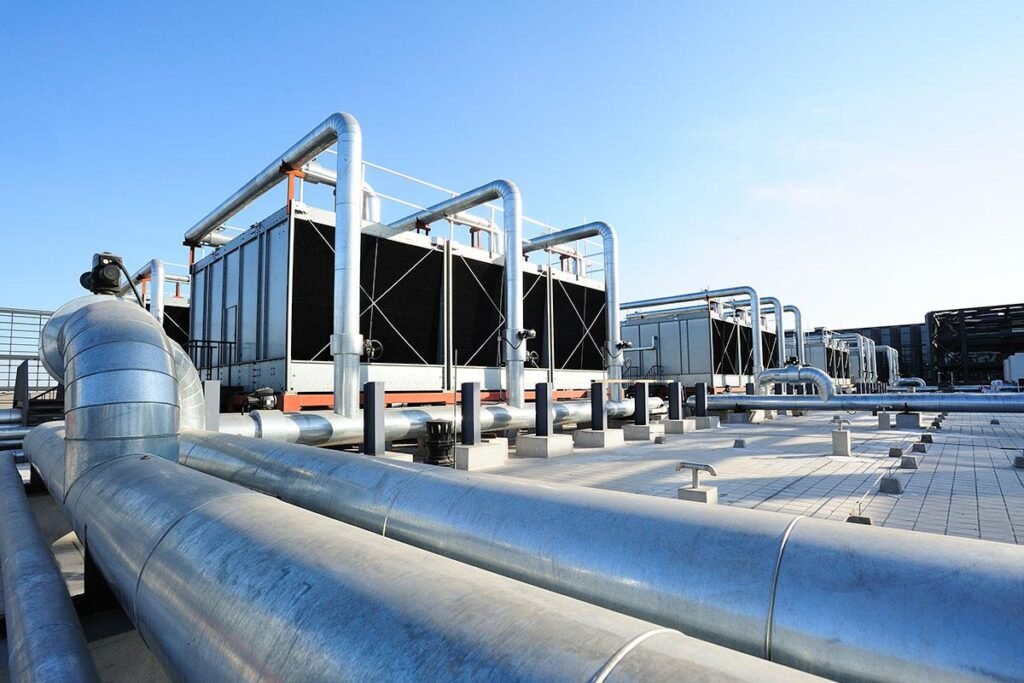
A large power station will usually have its own industrial control systems, safety systems, operator workstations and communications links. Wind and solar installations may be controlled through central management platforms, while smaller generators can be aggregated into virtual power plants.
An attacker who compromised one generator could potentially force it offline or make it unavailable. That would be serious, but the system is designed to cope with the sudden loss of generating units.
The risk becomes greater if several generators disconnect together, particularly if their combined output exceeds the reserves available to replace them.
Transmission: Moving Bulk Electricity Around Britain
The high-voltage transmission network moves large quantities of electricity over long distances.
In England and Wales, the transmission owner is National Grid Electricity Transmission. Scotland’s transmission networks are owned by Scottish Power Transmission and Scottish and Southern Electricity Networks Transmission.
NESO operates the Great Britain electricity system. It coordinates the movement of power and continually manages the relationship between electricity supply and demand.
Transmission substations contain transformers, protection equipment, circuit breakers and control systems. These facilities allow parts of the network to be isolated when faults occur.
A serious compromise of transmission control systems could be more consequential than an attack on one small generator because it might affect the routes through which electricity reaches entire regions. Even so, protection equipment does not simply accept every remote command without restriction. Some protection operates locally and automatically, independently of central control-room systems.
Distribution: Delivering Electricity to Homes and Businesses
Distribution networks take electricity from the transmission system and reduce it to the voltages used by homes, shops, offices and smaller industrial sites.
Britain is divided into distribution regions operated by different distribution network operators. Each operator manages thousands of substations, overhead lines, underground cables and associated control systems.
A compromise at this level is more likely to cause a geographically limited outage. An attacker might target a control centre, substation automation, remote terminal units or systems used to dispatch engineers.
The fragmented regional structure provides some resilience. Access to one distribution operator does not automatically provide access to every other operator.
However, common technology suppliers, remote-support services and shared software platforms can create correlated risk. A vulnerability affecting equipment used by several operators could be more dangerous than a compromise confined to one company.
Balancing: Keeping Supply and Demand Matched
Electricity must be produced at almost the same moment it is consumed. Britain’s system operates at a nominal frequency of 50 hertz.
When generation becomes insufficient, frequency falls. When generation exceeds demand, frequency rises. NESO procures balancing and frequency-response services from power stations, batteries, demand-response providers and other flexible assets.
If a generator unexpectedly disconnects, rapid-response services inject power or reduce demand. Operators can then instruct other generators to increase output.
If the imbalance becomes too severe, automatic protection may disconnect some customers. This process, known as low-frequency demand disconnection, sacrifices part of the demand to prevent a much larger system collapse.
This is a crucial point: some power cuts are deliberate protective actions. Temporarily disconnecting customers can be the mechanism that prevents the whole grid from failing.
Restoration: Rebuilding the System After a Major Failure
If a partial or total shutdown occurred, electricity would not be restored by turning one master switch back on.
NESO’s Electricity System Restoration arrangements — historically known as Black Start — are intended to restart sections of the network without relying on an already functioning national supply.
Restoration providers can start independently, energise parts of the transmission or distribution network and help restart larger generators. Operators build separate “power islands”, stabilise them and gradually reconnect them.
Restoration has to be controlled carefully. Connecting two unstable electrical islands at the wrong frequency, voltage or phase could damage equipment or cause another collapse.
NESO describes a total or partial transmission shutdown as unlikely but maintains contingency arrangements for orderly restoration. Its Distributed ReStart project has also examined how smaller resources, including hydro, wind, solar, biomass and gas turbines, could support recovery.

The Most Realistic Cyber-Attack Scenarios
Ransomware Disrupts an Energy Company’s Business Systems
This is considerably more plausible than an immediate national blackout.
Attackers might encrypt or disable:
- Email and collaboration systems
- Customer databases
- Billing platforms
- Staff identity systems
- Maintenance records
- Work scheduling
- Supplier portals
- Remote-access services
Operational technology should be separated from ordinary corporate IT, but the two environments are not always completely independent. Engineers may depend on corporate identity services, maintenance databases, laptops or remote-support systems.
A ransomware attack could therefore impair operations without directly controlling the grid. Engineers might lose access to diagrams, asset records or work orders. Companies could suspend remote connections while investigating. Control-room staff might have to use manual or degraded procedures.
The immediate result would more likely be operational difficulty, delayed maintenance or customer-service disruption than the loss of national electricity. Nevertheless, the danger grows if the attack coincides with storms, equipment failures or exceptionally tight electricity margins.
‘Which UK Energy Companies Have Suffered Cyber Incidents?‘examines the publicly known cases and separates confirmed incidents from speculation.
Attackers Compromise a Power Station
An attacker with access to operational technology might attempt to alter control settings, interfere with alarms or trip generating units.
Safety systems are designed to shut equipment down when dangerous conditions are detected. That makes the physical destruction of a modern power station much harder than dramatic reporting sometimes suggests.
Paradoxically, defenders may intentionally take the affected plant offline. Losing its output is preferable to operating machinery whose controls can no longer be trusted.
One power station tripping is normally manageable. Several large units disconnecting almost simultaneously would be much more serious, especially if reserve services did not respond as expected.
A Distribution Control Centre Is Disrupted
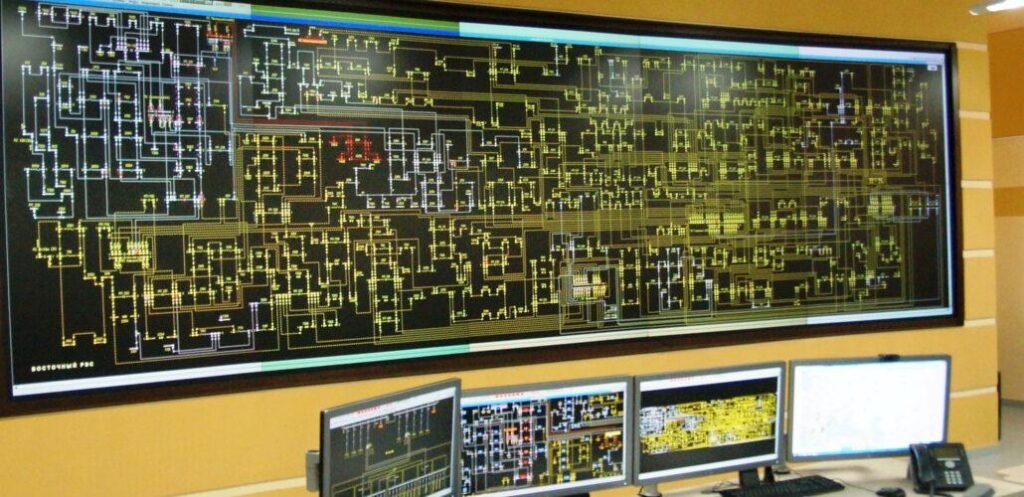
A distribution network operator uses control systems to monitor substations and manage the flow of electricity across its region.
Attackers might try to open circuit breakers, disable remote control, corrupt network information or overwhelm operators with false alarms. The probable effect would be a local or regional interruption rather than a nationwide failure.
Operators could send engineers to substations and operate some equipment locally, although physical recovery would be slower and more labour-intensive. A cyber attack that also disrupted telecommunications would make this considerably harder.
The growing importance of batteries makes Are Battery Storage Sites Vulnerable to Cyber Threats? particularly relevant to future grid resilience.
Attackers Target Distributed Energy Resources
The energy transition is adding millions of digitally connected devices to the system:
- Solar inverters
- Domestic and grid-scale batteries
- Electric-vehicle chargers
- Heat pumps
- Smart meters
- Flexible industrial loads
- Energy-management platforms
- Virtual power plants
Individually, most are too small to affect national stability. Collectively, coordinated devices can represent a substantial amount of generation or demand.
The UK Government’s 2026 Energy Sector Cyber Security Strategy specifically warns that the changing energy system creates new opportunities for attackers. It cites the attempted disruption of distributed energy resources in Poland in December 2025 as an example of the evolving threat.
A compromised fleet of devices might be instructed to switch on, switch off or change output together. If the change were large and sudden, it could disturb frequency or voltage.
The practical barriers remain substantial. Devices use different manufacturers, communications systems and control platforms. An attacker would need access to an unusually large aggregated fleet or several major platforms. Grid operators would also have balancing services and protection mechanisms available.
Even so, this is one of the areas where future risk deserves particular attention.
For a detailed explanation of the new national approach, read What the UK Energy Sector Cyber Security Strategy Means in Practice.
A Trusted Technology Supplier Is Compromised
Supply-chain compromise may be more scalable than attacking energy companies one by one.
A shared supplier could provide:
- Industrial control software
- Remote monitoring
- Network equipment
- Firmware updates
- Cloud services
- Engineering support
- Identity or authentication platforms
- Managed security services
If attackers compromised a supplier’s update mechanism or privileged remote-access system, they might gain routes into several energy organisations.
This still would not guarantee control. Customers should restrict supplier access, monitor privileged accounts, test updates and separate operational environments. But a widely trusted supplier could allow an adversary to bypass some perimeter defences.
Supply-chain security is consequently a central priority in the Government’s Energy Sector Cyber Security Strategy.
False Data Misleads System Operators
An attacker does not necessarily need to switch equipment directly. They might try to corrupt the information used by operators.
Examples include falsifying:
- Generator availability
- Network power flows
- Voltage measurements
- Frequency readings
- Weather-dependent generation forecasts
- Electricity demand forecasts
- Substation status
- Reserve availability
If operators made decisions using convincing false data, they could inadvertently worsen a disturbance.
Successful deception would be difficult because operators receive information from numerous sources and physical conditions cannot be concealed indefinitely. Local protection equipment would still react to genuine electrical conditions. However, the attack could delay recognition and complicate the response.
Communications Are Disabled During a Physical Emergency
A combined attack may be more credible than a cyber-only route to national collapse.
Imagine that severe weather has damaged transmission circuits. At the same time, attackers disrupt telecommunications, remote monitoring or coordination systems. Engineers cannot easily determine which equipment is available, and control rooms struggle to communicate with power stations or field teams.
The cyber component has not created the original electrical fault. It has made an already difficult incident harder to contain and slower to repair.
This “compound incident” is one of the most realistic ways cyber activity could contribute to widespread disruption.
What Ukraine’s Power Cuts Actually Demonstrate
Ukraine provides the best-known real-world evidence that cyber attacks can interrupt electricity supplies.
In December 2015, attackers compromised Ukrainian electricity distribution companies and remotely operated equipment, leaving approximately 225,000 customers without power. The operation involved more than malware alone: attackers conducted reconnaissance, obtained credentials, accessed operational systems, interfered with call centres and attempted to obstruct recovery.
A further attack in 2016 targeted a transmission substation near Kyiv. Ukraine subsequently faced other attempts against its energy infrastructure, including an operation disrupted in 2022.
These incidents proved several important points:
- Cyber attackers can cause real electricity outages.
- The operation requires detailed knowledge and preparation.
- Attackers may combine technical access with disruption of communications and recovery systems.
- Manual operation can provide an important fallback.
- Regional disruption is far more achievable than disabling an entire country.
The Ukrainian examples should be taken seriously, but they do not demonstrate that an attacker can casually switch off a modern national grid.
Ukraine was also operating under exceptional geopolitical conditions and later under full-scale war. Its experience cannot be transferred directly to Britain without considering differences in system architecture, threat exposure, defensive arrangements and operating conditions.

- Installs in circuit panel of most small businesses with clamp-on sensors. Supports single phase, single-split phase, and…
The 2019 Great Britain Power Cut: A Useful Non-Cyber Example
On 9 August 2019, a lightning strike affected a transmission circuit. Hornsea One offshore wind farm and Little Barford gas-fired power station then experienced near-simultaneous losses, followed by additional losses of distributed generation.
The resulting electricity deficit exceeded the response available at that moment. System frequency fell sufficiently for automatic low-frequency protection to disconnect customers.
More than one million customers lost electricity, and disruption affected railways, hospitals and other services. Electricity supplies were restored relatively quickly at network level, although some transport disruption continued much longer.
This was not a cyber attack. It is useful because it demonstrates how disruption spreads in a real power system:
- An initiating event occurs.
- Multiple generation losses follow.
- The imbalance exceeds available reserves.
- Frequency falls.
- Automatic protection disconnects demand.
- Wider infrastructure suffers knock-on effects.
A cyber operation would need to reproduce or intensify a similar sequence. Simply taking one asset offline would not normally be enough.
It also shows the difference between a serious national incident and a total blackout. More than a million customers losing power is substantial, yet most of Britain remained supplied and the transmission system did not completely collapse.
How Prepared Is the UK for Cyber Attacks on Critical Infrastructure?
What Would Have to Go Wrong for Disruption to Spread?
A Great Britain-wide cyber-related blackout would probably require several defensive layers to fail in sequence.
Attackers Gain Deep Operational Access
The attackers would need more than stolen email passwords. They would require sustained access to operational systems controlling significant generation, transmission, distribution or aggregated flexible assets.
They would also need to understand specialised equipment, network topology, operational procedures and the current state of the grid.
Several Important Assets Are Affected Together
The system can survive individual failures. To create a severe imbalance, attackers would probably have to disconnect multiple large generators, major transmission routes or substantial volumes of distributed resources within a short period.
Poor timing could render the attack ineffective. Electricity demand, renewable output, system inertia, interconnector flows and available reserves all change throughout the day.
Balancing Services Fail or Are Overwhelmed
Batteries, reserve generation, interconnectors and demand response would attempt to stabilise the grid.
For disruption to continue spreading, the initial loss would have to exceed those resources, or attackers would need to interfere with them as well.
Protection Systems Behave Unexpectedly
Circuit protection and automatic demand disconnection are intended to contain faults.
A cascading failure becomes more plausible if settings are wrong, protection behaves unexpectedly, hidden dependencies exist or the disturbance exceeds the scenarios for which safeguards were designed.
An attacker might try to manipulate protection settings in advance, but doing so across multiple independently managed assets without detection would be a formidable undertaking.
Operators Lose Visibility and Communications
Control-room staff need trustworthy information and reliable communications.
If attackers simultaneously corrupted telemetry, disabled voice communications and prevented remote control, operators might be forced to make decisions with incomplete information. This would slow containment and increase the risk of unnecessary or incorrect switching.
Regional Failures Fail to Separate Cleanly
Electrical networks are designed so that faults can be isolated. For a national collapse, a disturbance would have to propagate faster than sections could be stabilised or separated.
Transmission boundaries, protective relays and controlled demand disconnection are intended to stop precisely this type of cascade.
Restoration Is Also Compromised
Even after causing a widespread outage, attackers would need to obstruct recovery to produce prolonged national disruption.
They might attack restoration providers, communications, authentication services, fuel supplies or the systems used to coordinate network switching. Defenders would seek to isolate compromised networks, use clean systems and revert to manual procedures.
Keeping the power off could therefore be harder than causing the initial disturbance.

Why Britain Is Not Controlled by One Giant Switch
Electricity infrastructure is interconnected, but operational authority and technical control are distributed.
Different organisations own generators, transmission networks, distribution networks and interconnectors. NESO coordinates Great Britain’s system but does not function like a remote control for every component.
This separation creates complexity, and complexity can introduce vulnerabilities. It also limits the effect of one compromised organisation.
Attackers would encounter:
- Different control-system manufacturers
- Separate identity systems
- Multiple network operators
- Local protection equipment
- Safety interlocks
- Physical access controls
- Independent engineering teams
- Regulatory requirements
- Incident-response arrangements
- Manual operating capabilities
None of these controls makes disruption impossible. Together, however, they make the “one hacker, one laptop, one national switch” scenario misleading.
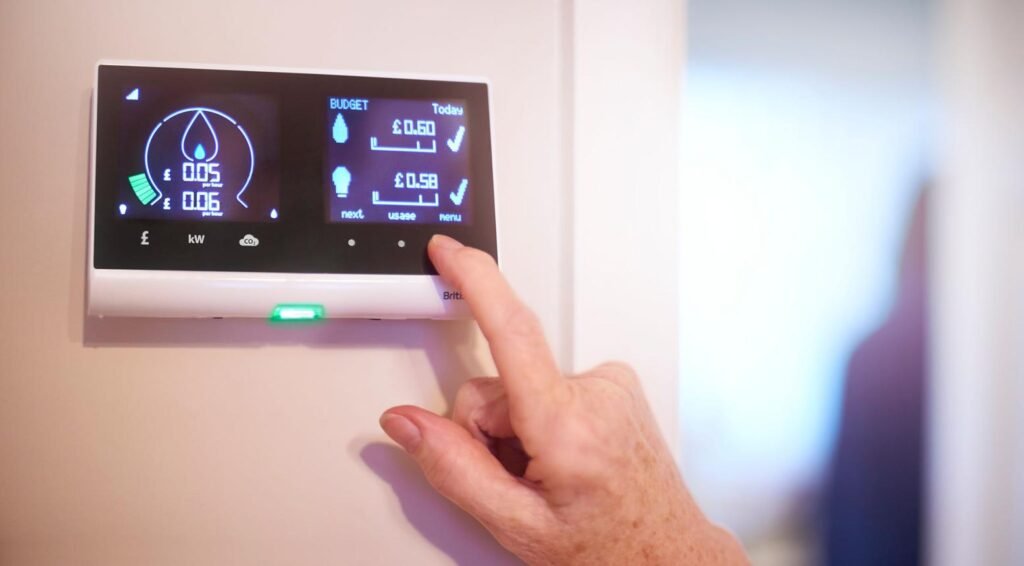
Could Smart Meters Be Used to Black Out Britain?
Smart meters are sometimes presented as a route through which attackers could disconnect millions of homes simultaneously.
The concern is not completely imaginary. Smart metering involves remote communications and, under controlled circumstances, supply can be remotely disconnected. Any technology capable of issuing remote instructions requires strong authentication, authorisation and monitoring.
However, a national attack would have to compromise highly controlled central systems or trusted components, defeat security measures, issue commands on an enormous scale and prevent rapid intervention.
Disconnecting households would also reduce demand rather than remove generation. A sudden, extremely large fall in demand could create an operational challenge, but grid controls would respond by reducing generation, changing interconnector flows and using balancing services.
A smart-meter incident could still cause significant customer disruption. Describing it as an effortless route to destroying the entire grid exaggerates both the attacker’s access and the likely electrical consequences.
Could Renewable Energy Make the Grid Easier to Hack?
Renewables do not automatically make the grid insecure. The changing technology mix does alter the risk.
Traditional electricity systems relied heavily on a smaller number of large, rotating power stations. Modern systems include vast numbers of inverter-connected devices, batteries, renewable generators and controllable loads.
At household level, Can Solar Panels Be Hacked? explains why the inverter, monitoring platform and installer account matter more than the panels themselves.
This creates advantages:
- Generation is more geographically dispersed.
- A fault at one wind or solar site need not remove a large centralised power station.
- Batteries can respond extremely quickly to frequency changes.
- Distributed resources may help restart local networks.
It also creates challenges:
- More internet-connected management platforms
- Greater reliance on software and firmware
- More suppliers and maintenance relationships
- Common inverter technologies deployed at scale
- Less direct visibility of small distributed assets
- New dependencies on data, forecasting and communications
The key issue is therefore not whether an asset is renewable. It is whether security, operational resilience and safe failure modes have been engineered into its entire lifecycle.

- Works with 1000+ Accounts: Compatible with Google, Microsoft, and Apple. A single Security Key NFC secures 100 of your f…
- Fast & Convenient Login: Plug in your Security Key NFC via USB and tap it, or tap it against your phone (NFC) to authent…
- Trusted Passkey Technology: Uses the latest passkey standards (FIDO2/WebAuthn & FIDO U2F) but does not support One-Time …
How the UK Is Reducing the Risk
The UK treats energy as critical national infrastructure. Relevant organisations operate under regulatory, national-security and industry requirements.
The Government’s 2026 Energy Sector Cyber Security Strategy sets out a joint approach involving the Department for Energy Security and Net Zero, NCSC, NESO and Ofgem.
Its priorities include:
- Better understanding of critical energy risks
- Stronger regulation
- Improved supply-chain security
- Development of cyber-security skills
- Greater resilience across new energy technologies
- Improved incident preparation and collaboration
The NCSC’s Cyber Assessment Framework is used to help organisations responsible for essential services assess whether they are managing cyber risks appropriately.
In 2026, the NCSC also warned operators of critical national infrastructure to prepare for severe cyber threats by mapping critical systems, planning for degraded IT and operational technology, rehearsing network isolation and preparing for system rebuilds.
The important word is resilience. No responsible authority can promise that every cyber intrusion will be prevented. The realistic goal is to stop a compromise becoming a safety incident, maintain essential functions, contain disruption and restore services securely.
Also see: What the UK Energy Sector Cyber Security Strategy Means in Practice
What Electricity Operators Need to Get Right
Separate Corporate IT From Operational Technology
A compromised office laptop should not provide a direct route into substation controls or generator safety systems.
Segmentation must be technically enforced, monitored and regularly tested. Emergency isolation should be possible without destroying essential operational capability.
Control Remote Access
Remote maintenance is useful but dangerous when poorly governed.
Access should be limited, authenticated, recorded and enabled only when required. Supplier accounts should not remain permanently active with excessive privileges.
Protect Engineering Workstations
Engineering laptops and workstations can change controller logic, relay settings and device configurations. They require stronger protection than ordinary office computers.
Their software, removable media, credentials and connections should be tightly managed.
Maintain Independent Safety and Protection
Where practicable, safety-critical protection should not depend on the same systems used for normal monitoring and control.
This prevents one compromise from simultaneously defeating control, alarms and safety.
Prepare for Manual and Degraded Operation
Operators should know what can continue if remote visibility, corporate identity systems or telecommunications are unavailable.
Manual operation is slower and not suitable as the sole answer, but it can prevent a cyber incident becoming an extended outage.
Rehearse Cyber-Physical Incidents
Exercises should include more than stolen data or unavailable email.
Useful scenarios include:
- Untrusted operational telemetry
- Simultaneous generator trips
- Loss of remote substation control
- Compromised supplier access
- Communications failure
- Restoration while malware may still be present
- Severe weather combined with a cyber incident
Secure the Restoration Process
Restoration plans must assume that some digital systems may be unavailable or untrustworthy.
Clean communications, alternative authentication, offline procedures and verified configurations are essential. Otherwise, an organisation could restore compromised equipment and recreate the incident.
What Would a Major Power Cut Mean for the Public?
A prolonged national electricity failure would affect far more than lighting.
Government emergency-planning material identifies potential consequences for:
- Mobile and internet communications
- Water supply and sewage treatment
- Fuel distribution
- Gas systems
- Electronic payments
- Transport
- Food refrigeration
- Health and care services
Hospitals, data centres, communications facilities and other critical sites usually have backup arrangements, but backup generators have limited fuel and batteries have limited duration.
Mobile networks may continue temporarily using batteries and generators, but service could deteriorate as equipment loses power or networks become congested.
A battery-powered or wind-up radio remains useful because conventional broadcasting forms part of emergency communication planning for a national outage.
For households, proportionate preparation could include:
- Keeping torches and spare batteries available
- Maintaining a charged power bank
- Having a battery or wind-up radio
- Keeping essential medical arrangements under review
- Knowing the electricity network emergency number, 105
- Avoiding unsafe use of candles, camping stoves or generators indoors
Preparation should be calm and practical. A cyber-induced national blackout is not an event households should expect, but the same basic measures are useful during storms and ordinary local power cuts.

- COMPATIBILITY: This is * Firewalla Purple SE*. The IPS functionality is limited to 500 Mbits. This device can be a route…
- COMPLETE CYBERSECURITY PROTECTION – Firewalla’s unique intrusion prevention system (IDS and IPS) protects all of your ho…
- PARENTAL CONTROL AND FAMILY PROTECT – The days of pulling the power cord from the dusty old router are behind you; with …
So, Could Hackers Really Switch Off Britain?
A cyber attack could cause a power cut in Britain. International incidents have already proved that electricity equipment can be manipulated and customers can be disconnected through cyber means.
A regional incident is credible. A coordinated attack against several energy companies is conceivable. A cyber incident amplifying storm damage, equipment failure or an electricity shortage is also realistic.
Use the UK Power Cut & Cyber Impact Checker to assess how a prolonged electricity outage could affect your home or small business and identify practical preparations.
A complete Great Britain-wide blackout would be much harder. It would probably require:
- Deep access to operational technology
- Detailed knowledge of the electricity system
- Coordinated action against several important assets
- A loss exceeding balancing reserves
- Failure or circumvention of protective systems
- Loss of trustworthy visibility and communications
- Unsuccessful operator intervention
- Propagation across regional boundaries
- Interference with restoration
A literal UK-wide failure would additionally have to affect Northern Ireland’s separately operated electricity system.
The honest conclusion is therefore neither “it could never happen” nor “one hacker could switch off Britain tomorrow”.
It is this:
A cyber-related national power failure is technically possible and serious enough to plan for, but it would be an exceptionally complex operation requiring multiple defensive, technical and operational failures. Localised disruption, compromised suppliers and attacks that worsen an existing emergency are much more realistic risks.
Reference Material and Research
- Energy Sector Cyber Security Strategy – UK Government
- Preparing for Severe Cyber Threat – National Cyber Security Centre
- Investigation into the 9 August 2019 Power Outage – Ofgem
- Electricity System Restoration Services – NESO
- Distributed ReStart – NESO
- Electricity System Restoration Service Contracts – NESO
- Cyber Threats to Critical Infrastructure – CISA
- How the Northern Ireland Grid and Electricity Market Interact – SONI
- Public Health Advice During a National Power Outage – UK Government
- National Risk Register 2026 – UK Government