Cyber Confusion

A Clearer Path To Cyber Security Without The Confusion

Diverse team in a bright office; a woman in a wheelchair uses a laptop while colleagues chat and share documents.

Cyber Security for a 5-Person English Business: What You Actually Need (And What You Don’t)

Most small UK businesses think cyber criminals only care about giant corporations. Unfortunately, criminals adore small businesses because they’re usually under-protected, overworked and still sharing passwords called “Office123”. Humanity keeps treating cyber security like changing the batteries in a smoke alarm. Ignore it for years, then panic once the building is on fire. A five-person […]

Cyber Security for a 5-Person English Business: What You Actually Need (And What You Don’t) Read More »

Cyber Confusion
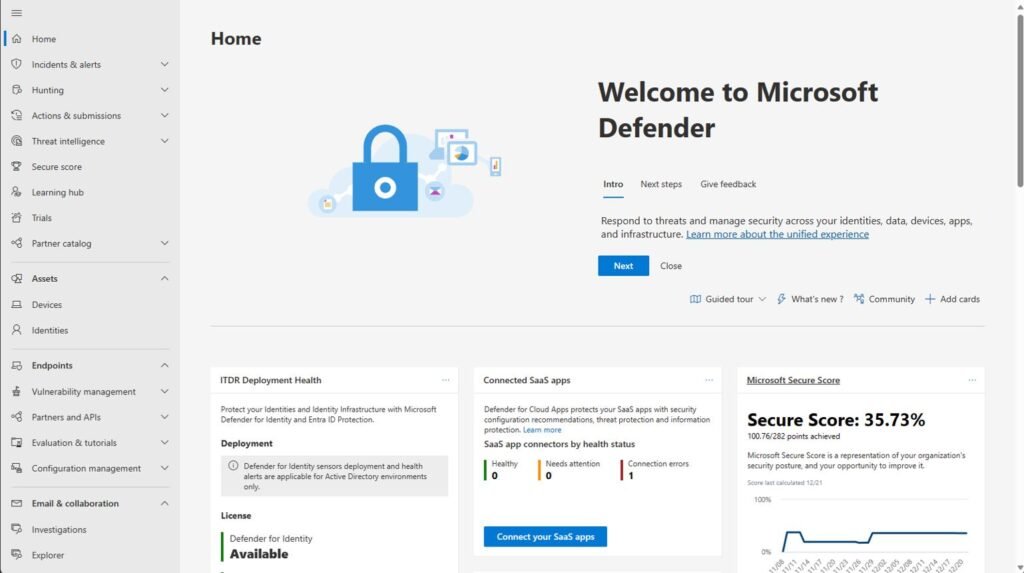
Screenshot of a Microsoft Defender welcome page showing left navigation menu and a large 'Welcome to Microsoft Defender' header with an illustrated security graphic on the left and three info cards below

Is Microsoft Defender Enough to Protect a Small English Business?

Most small UK businesses ask this question after somebody in the office clicks a suspicious invoice called “URGENT_PAYMENT_FINAL_v7_REALFINAL.xlsx”. Humanity keeps proving that malware authors understand office workers better than office managers do. The short answer is this: Microsoft Defender is good. Sometimes very good. But relying on it alone is risky for most small businesses. For

Is Microsoft Defender Enough to Protect a Small English Business? Read More »

Cyber Confusion
Operations center with a wall of monitors displaying charts and graphs while staff monitor data.”

Can AI Security Tools Be Trusted In The UK?

AI security tools can be trusted, but not blindly. For a UK small or medium-sized business, AI cyber security tools are useful for spotting suspicious behaviour, summarising alerts, detecting phishing, prioritising vulnerabilities and helping small teams respond faster. But they are not magic shields. They still make mistakes, miss attacks, create false alarms, depend on good

Can AI Security Tools Be Trusted In The UK? Read More »

Cyber Confusion
Man wearing a denim shirt sits at a table, resting his head on his hand while looking at a laptop screen in a modern workspace with teal lighting.

Your English Business Had a Cyber Breach. What Happens Next?

A cyber breach does not usually begin with dramatic hacker movie scenes and glowing green text. It normally starts with a tired employee clicking a fake Microsoft 365 email at 08:14 on a Tuesday while trying to drink cold coffee and survive another spreadsheet. Twenty minutes later, criminals may already be inside the business network.

Your English Business Had a Cyber Breach. What Happens Next? Read More »

Cyber Confusion
Cyber Essentials certification badge: blue circular emblem with a green checkmark and the text CYBER ESSENTIALS.

Do You Actually Need Cyber Essentials?

Short answer: not always. But for many English businesses, it has quietly shifted from “optional security badge” to “minimum expected hygiene”. Rather like washing your hands in a restaurant kitchen. Technically optional if you enjoy lawsuits and gastrointestinal roulette. For small and medium-sized UK businesses, National Cyber Security Centre backed Cyber Essentials is often one

Do You Actually Need Cyber Essentials? Read More »

Cyber Confusion
DDOS Attack

The DDOS Attack is Over But You Still Have Your Doubts

A successful DDoS defence does not mean the incident is over. Attackers sometimes use large-scale disruption precisely to distract defenders while they attempt something quieter such as credential theft, malware deployment, or persistence inside the network. So the correct mindset now is: assume compromise until you prove otherwise. Security teams treat this phase as post-incident threat hunting and

The DDOS Attack is Over But You Still Have Your Doubts Read More »

Cyber Confusion