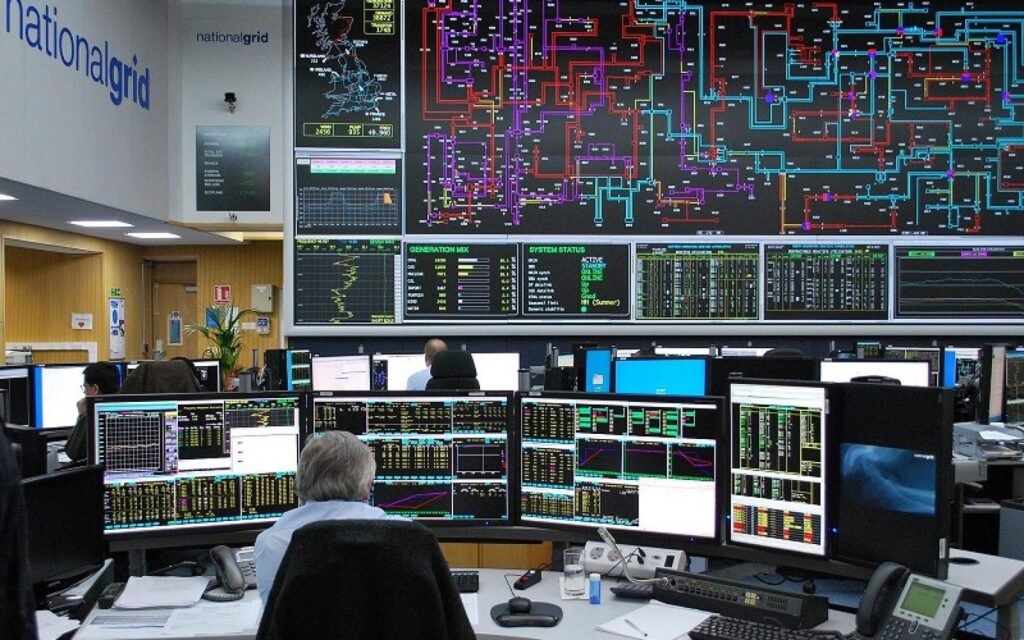
The UK’s energy infrastructure is undergoing one of the biggest transformations in its history. Traditional power stations are being joined by offshore wind farms, battery storage facilities, smart grids, electric vehicle charging networks and millions of connected devices. While this modernisation brings major benefits, it also creates new opportunities for cyber criminals, hostile states and organised hacking groups.
The energy sector is now considered one of Britain’s most critical national infrastructure sectors. A successful cyber attack could affect electricity generation, gas supplies, fuel distribution, smart meters, EV charging networks and industrial operations.
Understanding the emerging threats is becoming increasingly important as attackers evolve their tactics faster than many organisations can upgrade their defences.
The concerns explored in Could a Cyber Attack Cause UK Blackouts? highlight just how serious cyber risks have become for modern energy systems.

Why UK Energy Infrastructure Has Become a Prime Target
Energy systems are attractive targets because disruption can have widespread consequences.
Attackers understand that electricity and gas networks underpin virtually every aspect of modern life, including:
- Hospitals
- Transport systems
- Communications networks
- Financial services
- Water treatment facilities
- Manufacturing operations
- Emergency services
Unlike attacks against individual businesses, successful attacks on energy infrastructure can affect millions of people simultaneously.
State-sponsored groups view energy systems as strategic targets, while cyber criminals increasingly see them as opportunities for extortion through ransomware.
AI-Powered Cyber Attacks
Automated Reconnaissance
Artificial intelligence is allowing attackers to identify vulnerabilities faster than ever before.
Traditional cyber reconnaissance often required significant manual effort. AI tools can now:
- Scan vast networks rapidly
- Identify exposed systems
- Analyse security weaknesses
- Generate attack paths
- Prioritise vulnerable targets
This significantly reduces the time required to prepare attacks.

- 【OBSBOT × EWC 2025 Official Partnership】OBSBOT is thrilled to be the 2025 Esports World Cup (EWC) Official Camera & Webc…
- 【OBSBOT Tiny 2 – New Era of Webcam】Our 4K Webcam is equipped with 1/1.5″ CMOS Sensor, which is the largest and most adva…
- 【Superior AI-Tracking, Up 4 Tracking Modes】Our Tracking Webcam has fully upgraded the AI algorithm to make the auto-trac…
Advanced Phishing Campaigns
AI-generated phishing emails have become far more convincing.
Energy companies frequently deal with suppliers, contractors, regulators and customers. Attackers use AI to create realistic communications that can bypass employee suspicion.
Messages often contain:
- Accurate industry terminology
- Personalised content
- Correct formatting
- Convincing language
- Realistic business scenarios
These attacks are becoming increasingly difficult to identify.
The wider implications are explored in Is the UK Energy Sector Prepared for AI-Driven Cyber Attacks?
Attacks Against Operational Technology (OT)
The Shift From IT to Industrial Systems
Historically, attackers focused on corporate IT networks.
Today, many groups are targeting Operational Technology systems that control physical processes.
Examples include:
- Turbine controls
- Substation equipment
- Grid management systems
- Battery storage controllers
- SCADA systems
- Pipeline monitoring systems
A compromise of these systems can potentially cause physical disruption rather than merely data theft.

Legacy Equipment Risks
Many energy facilities still operate equipment installed decades ago.
These systems were designed for reliability and operational performance, not cyber security.
Common issues include:
- Unsupported software
- Weak authentication
- Unpatched vulnerabilities
- Insecure communication protocols
- Limited monitoring capabilities
Attackers increasingly seek these weaknesses because they are often easier to exploit than modern corporate systems.
Smart Grid and Smart Meter Threats
The UK’s smart energy transition has introduced millions of connected endpoints.
Every connected device potentially expands the attack surface.
Large-Scale Device Manipulation
Researchers have demonstrated theoretical scenarios where compromised smart devices could be coordinated to create sudden changes in electricity demand.
Potential consequences include:
- Grid instability
- Demand forecasting issues
- Voltage fluctuations
- Localised outages
While protections exist, the growing number of connected devices increases complexity.
Many of these concerns are explored in Are Smart Meters a Cybersecurity Risk?

- [Fastest Charging in the Industry] – Fully recharge using an AC outlet in only 70 minutes with EcoFlow’s X-Stream fast c…
- [Power 80% of Your Appliances] – With an output of up to 1600W, run 80% off all your appliances, even high wattage ones….
- [LFP Long-Life Battery] – Using LFP battery cells, use and recharge RIVER 2 Pro more than 3000 times before hitting 80%….
Data Collection Risks
Smart energy systems generate enormous volumes of data.
Information can reveal:
- Occupancy patterns
- Energy usage habits
- Business operating schedules
- Equipment activity
Attackers may target these datasets for intelligence gathering rather than direct disruption.
Ransomware Targeting Energy Operators
A Growing Threat
Ransomware remains one of the most significant threats facing critical infrastructure.
Attackers increasingly target:
- Energy suppliers
- Grid operators
- Renewable energy companies
- Fuel distributors
- Utility service providers
The objective is often financial rather than political.
However, operational disruption can still be severe.
Supply Chain Entry Points
Energy companies depend upon hundreds of third-party suppliers.
Attackers increasingly compromise:
- Software vendors
- Managed service providers
- Maintenance contractors
- Engineering firms
- Equipment manufacturers
A weakness in one supplier can create access to multiple organisations.
This remains one of the most difficult risks to manage.
Cyber Threats to Renewable Energy Infrastructure
Renewable energy facilities were once considered relatively isolated.
Modern wind farms and solar facilities are highly connected environments.
Offshore Wind Farm Vulnerabilities
Offshore wind operations depend upon:
- Satellite communications
- Remote monitoring systems
- Cloud platforms
- Industrial control systems
- Maintenance networks
These connections improve efficiency but increase cyber exposure.
The topic is examined in greater depth in Could Hackers Disrupt Offshore Wind Farms?

Battery Storage Systems
Battery Energy Storage Systems (BESS) are becoming increasingly important to the UK grid.
Potential cyber risks include:
- Remote control manipulation
- Charging and discharging disruption
- Monitoring failures
- Safety system interference
- Data integrity attacks
As battery deployment accelerates, attackers are likely to devote greater attention to these assets.
EV Charging Infrastructure Threats
The rapid growth of electric vehicles has created an entirely new category of energy infrastructure.
Modern charging stations often feature:
- Internet connectivity
- Mobile applications
- Payment processing
- Remote management systems
- Cloud integrations
Potential attack targets include:
- Customer data
- Payment systems
- Charger availability
- Network management platforms
A large-scale disruption could affect transport networks as well as energy infrastructure.
Nation-State Threat Activity
Strategic Targeting
Security agencies across Europe continue to warn that state-sponsored groups are actively probing critical infrastructure.
Such groups are typically:
- Well funded
- Technically advanced
- Patient
- Highly organised
Their objectives may include:
- Intelligence gathering
- Pre-positioning for future conflicts
- Economic disruption
- Strategic influence
Living-Off-The-Land Techniques
Modern advanced attackers increasingly avoid malware.
Instead, they exploit legitimate administrative tools already present within networks.
This makes detection considerably harder because activity appears normal.

- Back-UPS BX provides guaranteed power and surge protection for desktop computers, wireless networks, gaming consoles and…
- 700 VA/390 Watts – Automatic Voltage Regulation (AVR)
- PowerShute shutdown software – USB Connector
Cloud and Hybrid Infrastructure Risks
Energy companies increasingly use cloud platforms for:
- Monitoring
- Analytics
- Asset management
- Forecasting
- Customer services
While cloud services often improve security, misconfigurations remain a significant concern.
Common problems include:
- Excessive permissions
- Exposed databases
- Poor identity management
- Insecure APIs
- Weak access controls
These issues are becoming a major source of security incidents across multiple industries.
The Growing Importance of Threat Detection
Prevention alone is no longer sufficient.
Modern energy organisations increasingly focus on:
- Continuous monitoring
- Threat intelligence
- Behavioural analytics
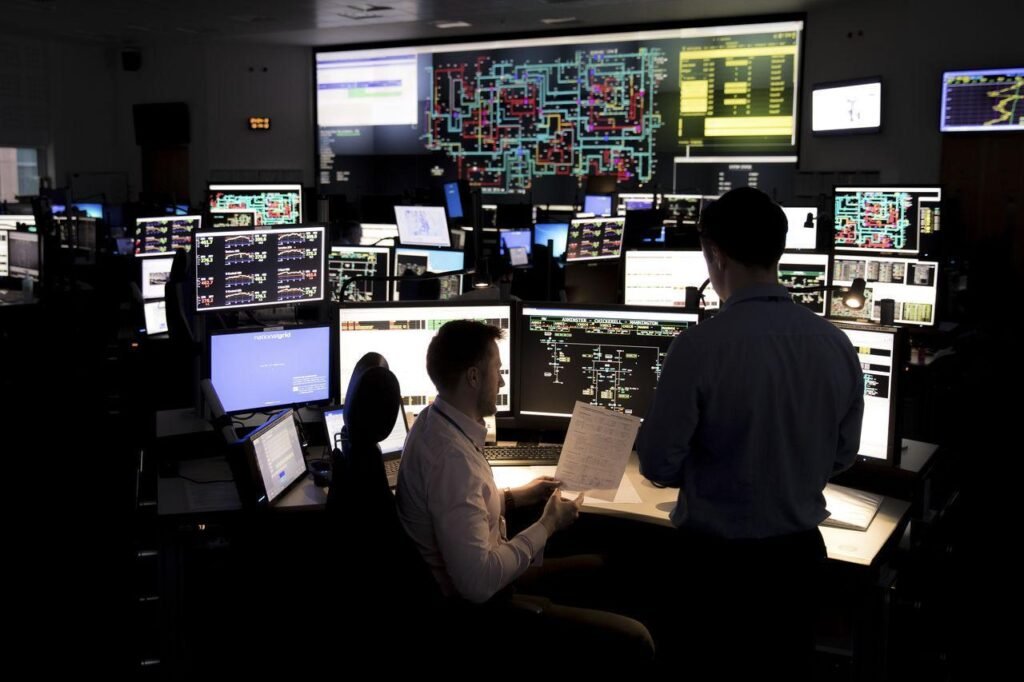
- Security operations centres
- Incident response planning
- Network segmentation
Rapid detection can significantly reduce the impact of an attack.
Many of these defensive approaches are explored in How Do Energy Firms Detect Cyber Attacks?
Regulatory Pressures and Compliance Challenges
Energy organisations face increasing regulatory expectations.
Requirements are expanding around:
- Incident reporting
- Supply chain security
- Risk assessments
- Operational resilience
- Cyber governance
Regulators recognise that cyber security is now inseparable from energy security.
Compliance alone is not enough, but it is becoming a critical foundation.
Conclusion
The emerging cyber threats facing UK energy infrastructure are becoming more sophisticated, more automated and more difficult to detect. AI-powered attacks, ransomware, operational technology compromises, smart grid vulnerabilities, renewable energy risks and nation-state activity are all reshaping the threat landscape.
The challenge for the UK energy sector is that digital transformation and cyber risk are advancing together. Every new smart meter, EV charger, battery storage facility and connected renewable energy asset creates both opportunity and exposure.
The organisations most likely to succeed will be those that treat cyber security not as an IT issue, but as a core component of energy resilience. In a world where electricity, communications and national security are increasingly interconnected, protecting energy infrastructure is no longer simply about keeping the lights on. It is about safeguarding the foundations of modern society itself. A remarkably important task, considering humans seem determined to connect absolutely everything to the internet.