Quantum computing has been described as the next technological revolution. While today’s most advanced quantum computers are still limited, governments, intelligence agencies, technology companies and energy operators are already preparing for the day when quantum machines become powerful enough to break existing encryption standards.
For the UK energy sector, the implications are significant. Energy networks increasingly depend on digital communications, smart devices, cloud services, operational technology (OT), industrial control systems and automated decision-making. Much of this infrastructure relies on encryption and authentication systems that could eventually be vulnerable to quantum attacks.
The question is not whether quantum computing will affect energy security. The real question is when.
Why Quantum Computing Matters
Traditional computers process information using bits that exist as either 0 or 1.
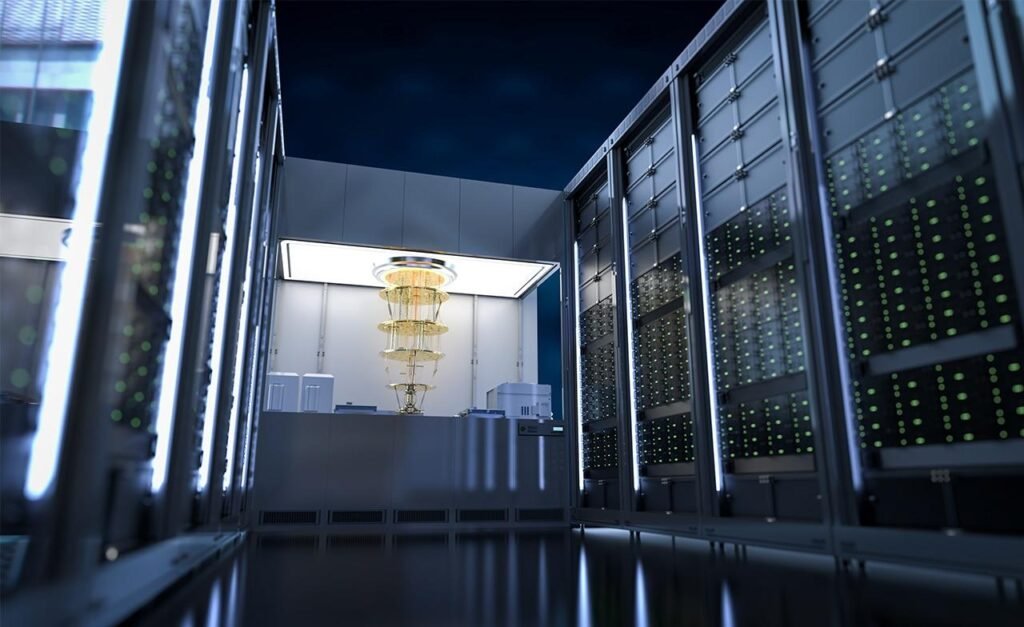
Quantum computers use quantum bits, known as qubits, which can exist in multiple states simultaneously through quantum phenomena such as superposition and entanglement.
This allows quantum computers to solve certain complex mathematical problems exponentially faster than conventional computers.
For energy companies, that capability offers enormous benefits:
- More efficient power grid optimisation
- Improved renewable energy forecasting
- Better battery development
- Faster materials research
- Advanced energy market modelling
- Enhanced weather prediction
However, the same technology could also undermine many of today’s cybersecurity protections.
How Energy Infrastructure Uses Encryption
Modern energy systems rely heavily on encryption to protect communications and operations.
Smart Meter Communications
Millions of UK smart meters transmit consumption data securely using encrypted communications.
Encryption helps ensure:
- Data integrity
- Consumer privacy
- Accurate billing
- Remote management security
Grid Control Systems
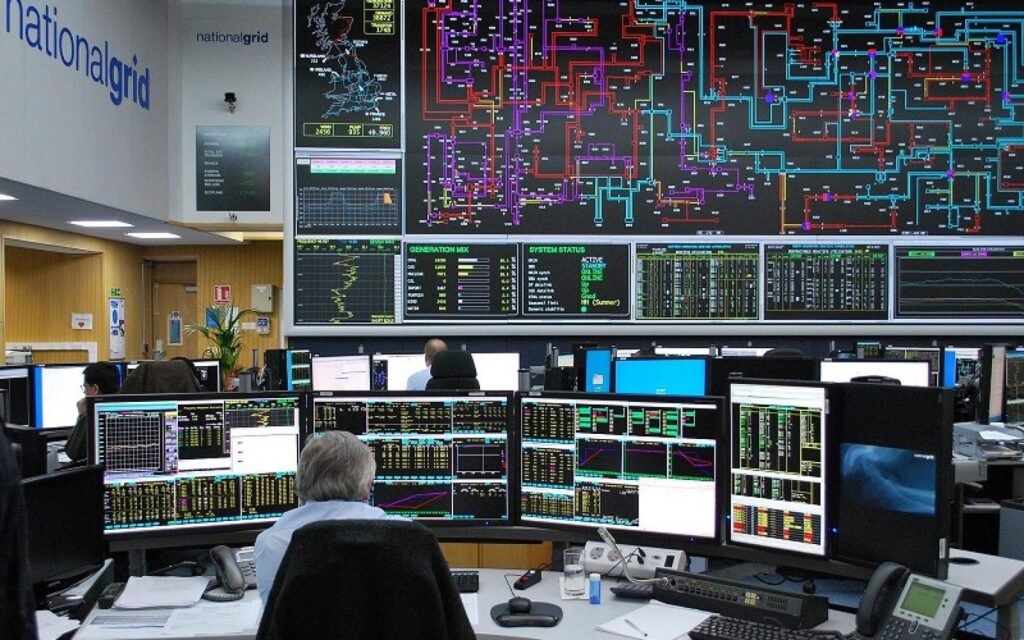
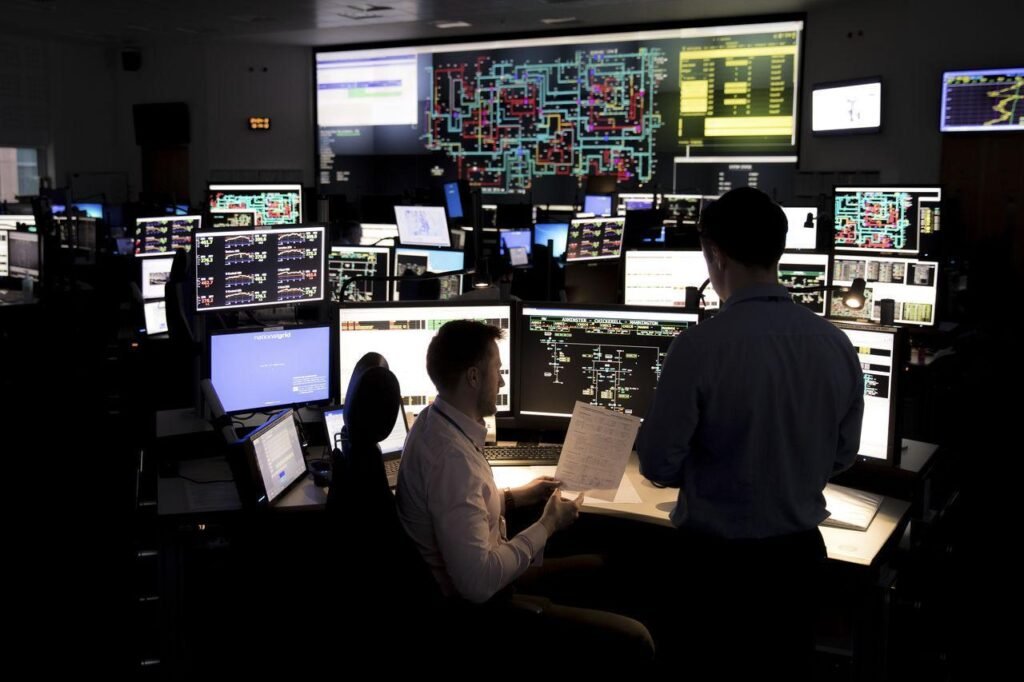
National Grid operators and distribution network operators exchange vast quantities of operational data.
This includes:
- Load balancing instructions
- Frequency control commands
- Outage management
- Demand forecasting data
- Emergency response communications

- COMPATIBILITY: This is * Firewalla Purple SE*. The IPS functionality is limited to 500 Mbits. This device can be a route…
- COMPLETE CYBERSECURITY PROTECTION – Firewalla’s unique intrusion prevention system (IDS and IPS) protects all of your ho…
- PARENTAL CONTROL AND FAMILY PROTECT – The days of pulling the power cord from the dusty old router are behind you; with …
Renewable Energy Networks
Wind farms, solar installations and battery storage sites often rely on remote monitoring and control systems connected through encrypted networks.
Energy Market Transactions
Wholesale energy trading platforms process billions of pounds of transactions each year using secure cryptographic systems.
If those systems become vulnerable, market manipulation risks could increase.
How Quantum Computers Could Break Encryption
Many current security systems rely on mathematical problems that are extremely difficult for classical computers to solve.
Examples include:
- RSA
- Diffie-Hellman
- Elliptic Curve Cryptography (ECC)
These systems protect:
- VPNs
- Web traffic
- Smart devices
- Operational technology
- Financial transactions
- Identity management systems
Shor’s Algorithm
A sufficiently powerful quantum computer running Shor’s Algorithm could solve these mathematical problems dramatically faster than today’s computers.
What might take a classical computer thousands of years could potentially be completed within hours or days.
This could allow attackers to:
- Decrypt sensitive communications
- Forge digital certificates
- Impersonate trusted systems
- Access protected networks
- Disrupt operational systems
For critical national infrastructure, that creates obvious concerns.

Could Quantum Computers Cause Blackouts?
Not directly.
A quantum computer would not magically switch off power stations.
However, it could weaken security controls that protect critical systems.
Authentication Risks
Many industrial systems trust communications based on cryptographic certificates.
If these certificates become forgeable, attackers could potentially:
- Issue fraudulent commands
- Interfere with system communications
- Manipulate monitoring data
- Disrupt operational processes
Supply Chain Risks
Energy companies depend on thousands of suppliers.
A quantum-enabled attacker may target:
- Software vendors
- Cloud providers
- Equipment manufacturers
- Telecommunications suppliers
Compromising trusted third parties often provides easier access than attacking energy operators directly.
Long-Term Intelligence Gathering
One concern is known as “Harvest Now, Decrypt Later”.
Attackers can intercept and store encrypted information today even if they cannot currently read it.
Once powerful quantum computers emerge, that historical data may become readable.
For energy operators, this could expose:
- Infrastructure diagrams
- Security procedures
- Technical documentation
- Supplier contracts
- Operational communications
Which Energy Systems Could Be Most Vulnerable?

- MULTI-LAYERED SECURITY HARDWARE: Reputation filtering (IP/DNS/URL) and SecuReporter visibility included in Entry Defense…
- OFFLINE-CAPABLE SETUP AND UPDATES: Configure via Nebula portal wizard; update firmware offline via FTP on the local netw…
- COMPACT FANLESS DESIGN: with SPI 2,000 Mbps firewall throughput, 1,000 Mbps IPS, 500 Mbps VPN, the firewall supports up …
Some parts of the energy sector face greater risks than others.
Legacy Industrial Control Systems
Many operational technology environments were designed decades ago.
These systems often:
- Have long replacement cycles
- Use outdated protocols
- Support limited security upgrades
- Remain operational for 20 years or more
Retrofitting quantum-resistant security into legacy environments can be difficult and expensive.
Smart Grids
Future smart grids depend heavily on secure machine-to-machine communications.
If trust mechanisms fail, attackers may exploit vulnerabilities at scale.
Distributed Energy Resources
Modern energy networks increasingly include:
- Solar installations
- Wind farms
- Battery storage sites
- EV charging infrastructure
- Vehicle-to-grid systems
The more connected devices involved, the larger the attack surface becomes.
Is the Threat Immediate?
Not yet.
Current quantum computers remain far from the scale required to break widely used encryption standards.
Experts generally believe that practical cryptographically relevant quantum computers remain several years away.
However, the transition to quantum-resistant security can take a decade or longer.
That is why organisations are preparing now.
Waiting until a quantum breakthrough occurs would be far too late.
What Is the UK Doing About Quantum Security?
The UK government has identified quantum technologies as a strategic priority.
The UK’s National Cyber Security Centre (NCSC) has already issued guidance encouraging organisations to begin planning for post-quantum cryptography.
Critical infrastructure operators are being encouraged to:
- Identify vulnerable cryptographic systems
- Assess long-term risks
- Develop migration strategies
- Upgrade critical infrastructure gradually
Large energy organisations are increasingly conducting quantum-readiness assessments.
<a name=”image3″></a>

What Is Post-Quantum Cryptography?
Post-quantum cryptography (PQC) refers to encryption methods designed to resist attacks from both classical and quantum computers.
Unlike current encryption systems, PQC algorithms rely on mathematical problems believed to remain secure even against large-scale quantum machines.
Benefits of Post-Quantum Cryptography
Energy operators adopting PQC could gain:
- Long-term data protection
- Improved infrastructure resilience
- Reduced future migration costs
- Enhanced regulatory compliance
- Better protection against nation-state threats
Several new standards are already being developed and adopted internationally.
How Energy Companies Are Preparing
Many major utilities have begun planning for a post-quantum future.
Asset Discovery
Organisations are identifying:
- Cryptographic assets
- Vulnerable devices
- Legacy infrastructure
- Third-party dependencies
Cryptographic Agility
Modern security architectures increasingly focus on “cryptographic agility”.
This means organisations can replace encryption algorithms quickly when threats evolve.
Supply Chain Reviews
Energy operators are also assessing suppliers to ensure future compatibility with quantum-safe technologies.

- Full HD streaming: Logitech C922 provides two streaming qualities to choose from. Whether you’re after full HD 1080p at …
- Multiple mounting options including tripod: This HD streaming webcam comes equipped with a versatile tripod. Mount the U…
- Auto-lighting corrections: Alongside full HD streaming over wifi, this gaming webcam is equipped with autofocus and inst…
The Role of Artificial Intelligence and Quantum Computing
Interestingly, AI and quantum computing may eventually work together.
While quantum computers could threaten current security systems, they may also improve:
- Threat detection
- Grid optimisation
- Energy forecasting
- Incident response
- Cyber defence automation
This creates a technological arms race where defenders and attackers both gain access to more powerful tools.
As discussed in Is the UK Energy Sector Prepared for AI-Driven Cyber Attacks?, emerging technologies rarely create purely positive or purely negative outcomes. Security depends on how organisations adapt.
What Should UK Energy Operators Do Now?
The most effective response is preparation rather than panic.
Energy operators should:
- Inventory cryptographic systems
- Review long-term data protection needs
- Adopt quantum-readiness programmes
- Engage with NCSC guidance
- Assess supplier preparedness
- Build cryptographic agility into future projects
- Monitor post-quantum standards development
Organisations already following strong security practices outlined in How Do Energy Firms Detect Cyber Attacks? will be better positioned for the transition.
Final Thoughts
Quantum computing has the potential to transform energy production, distribution and optimisation. It could accelerate renewable energy development, improve grid efficiency and unlock scientific breakthroughs that are currently impossible.
At the same time, it presents one of the most significant long-term cybersecurity challenges facing critical national infrastructure.
The threat is not an imminent quantum-powered blackout. The greater risk is that today’s encrypted systems may eventually become obsolete, exposing sensitive information and weakening trust across the energy ecosystem.
Much like the concerns explored in Could a Cyber Attack Cause UK Blackouts? and What Are the Biggest Cyber Threats to UK Infrastructure?, the challenge is not simply technology itself. It is whether organisations adapt quickly enough to stay ahead of it.
For UK energy providers, regulators and infrastructure operators, the transition to quantum-safe security has already begun. The companies that start preparing today will be far better protected when quantum computing eventually moves from the laboratory into the real world. Human civilisation does enjoy waiting until the roof is on fire before buying a smoke alarm, but this is one occasion where planning ahead is considerably cheaper.