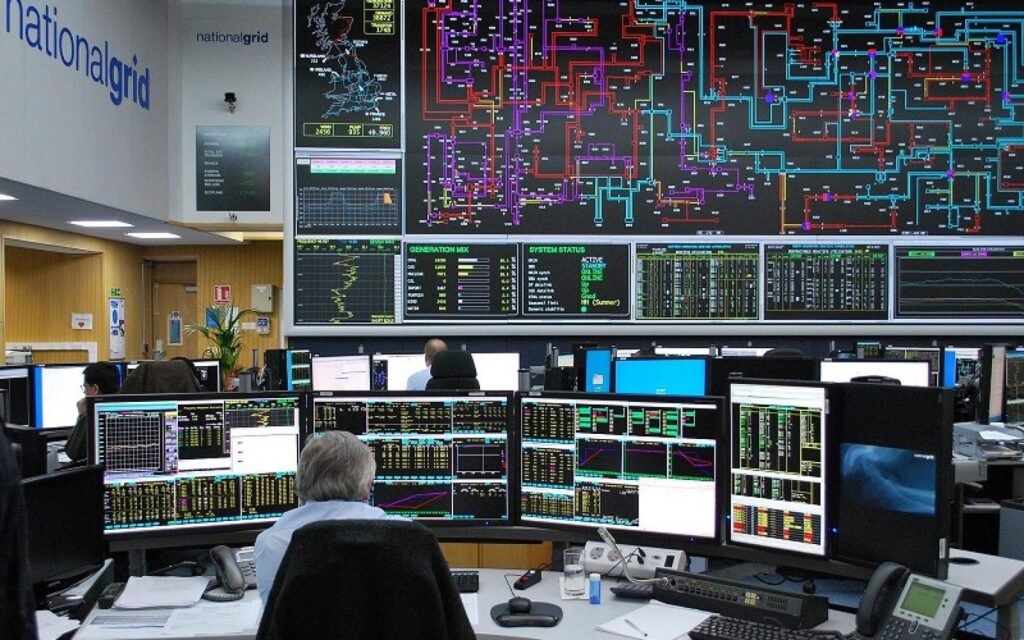
Artificial intelligence is rapidly becoming one of the most powerful tools in cybersecurity. Unfortunately, it is also becoming one of the most powerful weapons available to cyber criminals, hostile states and organised cyber gangs.
For decades, cyber attacks against energy companies required skilled hackers, significant resources and months of preparation. AI is changing that equation. Attackers can now automate reconnaissance, generate sophisticated phishing campaigns, identify vulnerabilities at scale and adapt attacks in real time.
The result is a future where cyber attacks become faster, cheaper, more convincing and potentially far more disruptive to critical energy infrastructure.
For the UK’s energy sector, that presents serious challenges. From electricity networks and gas distribution systems to renewable energy assets and EV charging infrastructure, AI-powered attacks could fundamentally reshape the threat landscape.
In many ways, the energy industry is entering an era where machines may increasingly attack machines.
Why AI Changes the Cyber Threat Landscape
Traditional cyber attacks often rely on human operators making decisions during an attack.
AI can automate many of those decisions.
Attack tools powered by machine learning can:
- Scan thousands of systems simultaneously
- Identify weak points automatically
- Adapt to defensive measures
- Generate realistic social engineering content
- Create convincing fake communications
- Analyse stolen data at enormous speed
- Launch attacks continuously without fatigue
Humans get tired.
Algorithms do not.
This allows attackers to scale operations far beyond what was previously possible.
As discussed in The Future of Energy Cyber Security, the next generation of cyber threats will increasingly involve autonomous systems capable of operating with minimal human intervention.

- 6 x 3 Pin UK Plug sockets (3 Surge Only + 3 Battery and Surge)
- Battery backup power and protection for electrical devices, including: PC’s, NAS, Surveillance systems, Gaming Consoles,…
- 1200VA/720W with 9 min runtime at half load
AI-Powered Reconnaissance Could Expose Energy Networks Faster
Mapping Critical Infrastructure
Before launching an attack, cyber criminals need intelligence.
AI can dramatically accelerate the process.
Advanced tools can:
- Identify publicly exposed systems
- Analyse employee information
- Map supplier relationships
- Discover connected devices
- Locate remote access services
- Profile organisational structures
A task that once took weeks may eventually take hours.
For energy operators managing thousands of assets across multiple regions, this creates a significant challenge.
Supply Chain Discovery
Energy companies rarely operate alone.
They depend on:
- Software suppliers
- Maintenance contractors
- Equipment manufacturers
- Cloud providers
- Communications partners
AI systems can analyse these relationships and identify weaker third-party targets that may provide access to larger organisations.
AI Could Make Phishing Attacks Almost Impossible to Spot
Personalised Social Engineering
Many successful cyber attacks begin with a simple email.
Historically, phishing messages often contained spelling mistakes, awkward grammar or suspicious wording.
AI removes many of those weaknesses.
Modern language models can create:
- Perfect English communications
- Industry-specific terminology
- Personalised messages
- Realistic executive communications
- Context-aware requests
Attackers can tailor messages to individual employees using publicly available information.
The result is a much higher probability of success.

- 【OBSBOT × EWC 2025 Official Partnership】OBSBOT is thrilled to be the 2025 Esports World Cup (EWC) Official Camera & Webc…
- 【OBSBOT Tiny 2 – New Era of Webcam】Our 4K Webcam is equipped with 1/1.5″ CMOS Sensor, which is the largest and most adva…
- 【Superior AI-Tracking, Up 4 Tracking Modes】Our Tracking Webcam has fully upgraded the AI algorithm to make the auto-trac…
Deepfake Voice and Video Attacks
Future attacks may involve AI-generated voices and videos.
Imagine receiving a phone call that sounds exactly like your manager.
Or a video conference request appearing to come from a senior executive.
These technologies already exist and continue to improve.
Energy companies handling operational decisions and financial transactions could become attractive targets.

Operational Technology Could Face New Risks
The Energy Sector’s Unique Challenge
Energy companies rely heavily on operational technology (OT).
This includes:
- Grid control systems
- SCADA environments
- Industrial control systems
- Substation automation
- Renewable energy management platforms
Unlike office IT systems, OT environments directly influence physical infrastructure.
If compromised, the consequences may extend beyond data loss.
Potential impacts include:
- Power outages
- Equipment damage
- Operational disruption
- Safety incidents
- Financial losses
Adaptive Malware
Traditional malware follows predefined instructions.
AI-enhanced malware may become far more adaptable.
Potential capabilities include:
- Learning network behaviour
- Avoiding detection tools
- Changing attack methods
- Selecting targets dynamically
- Modifying attack timing
Such malware could make incident response significantly more difficult.
Renewable Energy Assets May Become Attractive Targets
Growing Attack Surface
The UK’s renewable energy expansion is creating millions of new digital connections.
These include:
- Smart inverters
- Wind turbine control systems
- Solar monitoring platforms
- Battery storage management systems
- Remote maintenance services
Each connected device potentially increases exposure.
As explored in Could Cyber Warfare Target Renewable Energy Infrastructure?, renewable assets provide attractive opportunities because they are geographically dispersed and highly connected.

- Back-UPS BX provides guaranteed power and surge protection for desktop computers, wireless networks, gaming consoles and…
- 700 VA/390 Watts – Automatic Voltage Regulation (AVR)
- PowerShute shutdown software – USB Connector
Distributed Vulnerabilities
Unlike traditional power stations, renewable assets are often spread across thousands of locations.
AI tools could help attackers identify common vulnerabilities across large numbers of devices simultaneously.
This could allow coordinated attacks at unprecedented scale.
AI Could Accelerate Nation-State Cyber Operations
Geopolitical Implications
Energy infrastructure remains a strategic target during international tensions.
Hostile states increasingly view cyber capabilities as alternatives to conventional military action.
AI could provide:
- Faster intelligence gathering
- Automated vulnerability discovery
- Enhanced espionage operations
- More effective disruption campaigns
The combination of geopolitical competition and AI-driven cyber capabilities may significantly increase pressure on national infrastructure.
Critical Infrastructure Targeting
National grids are among the most complex systems ever built.
AI can help attackers analyse these environments more effectively than traditional manual approaches.
This raises concerns about future attacks designed to:
- Disrupt electricity supply
- Undermine public confidence
- Create economic instability
- Influence political decision-making
Check out our UK Power Cut & Cyber Impact Checker – See how badly a UK power outage or cyber-related energy disruption could affect your home or small business — and what to fix first.
Defenders Will Use AI Too
Fortunately, attackers are not the only ones gaining access to AI.
AI-Powered Threat Detection
Energy companies are increasingly deploying AI systems capable of:
- Monitoring network traffic
- Detecting unusual behaviour
- Identifying emerging threats
- Predicting attack patterns
- Prioritising incidents
These technologies help security teams respond faster.
Autonomous Defence
Future security systems may automatically:
- Isolate compromised devices
- Block suspicious activity
- Restrict network access
- Deploy protective controls
This creates an ongoing technological contest between offensive and defensive AI systems.
In many organisations, AI may eventually become the first line of defence.

How Prepared Is The UK Energy Sector?
Progress Has Been Made
The UK has strengthened critical infrastructure protection significantly over recent years.
Key organisations include:
- National Cyber Security Centre
- Ofgem
- National Grid
Energy companies now invest heavily in:
- Threat monitoring
- Incident response
- Security testing
- Employee awareness training
- Supply chain security
Challenges Remain
Despite improvements, significant challenges remain:
- Legacy infrastructure
- Skills shortages
- Growing connectivity
- Supply chain complexity
- Increasing threat volumes
As highlighted in How Prepared Is the UK for Cyber Attacks on Critical Infrastructure?, resilience must continue evolving alongside the threat landscape.
What Might The Next Decade Look Like?
The Cyber Arms Race Accelerates
The next ten years are likely to see:
- AI attacking AI
- Automated threat hunting
- Machine-speed attacks
- Real-time adaptive malware
- Autonomous defensive systems
Energy companies will increasingly rely on artificial intelligence not simply to improve efficiency, but to survive in an increasingly hostile cyber environment.

- Gigabit Wi-Fi for 8K Streaming – 5400 Mbps Wi-Fi for faster browsing, streamings, and downloading, all at the same time
- Wi-Fi 6 VPN Router– Equips with the top structure of 4T4R and HE160 on the 5 GHz band to enable a 4.8 Gbps ultra-fast co…
- Connect 100+ Devices– Supports MU-MIMO and OFDMA to reduce congestion and quadruple the average throughput
Human Expertise Still Matters
Despite rapid advances, human judgement remains critical.
Cybersecurity professionals understand context, risk and consequences in ways that machines still struggle to replicate.
The strongest future defence is likely to combine:
- Human expertise
- AI-driven monitoring
- Strong governance
- Secure system design
- Continuous testing
Final Thoughts
AI-driven cyber attacks are unlikely to be a distant future problem. They are already emerging today.
For the UK energy sector, the stakes are particularly high. Modern energy systems are becoming more digital, more connected and more dependent on data than ever before.
The same technologies that can help manage electricity networks, optimise renewable generation and improve efficiency can also be exploited by attackers.
The organisations that thrive in the coming decade will be those that recognise a simple reality: cybersecurity is no longer just an IT issue. It is now a core component of energy security itself.
The question is not whether AI will change cyber warfare.
It already has.
The question is whether defenders can evolve quickly enough to keep pace.
In that context, What Are the Emerging Cyber Threats Facing UK Energy Infrastructure? and Are Energy Companies Facing More Cyber Threats Than Ever? are becoming increasingly important questions for every organisation operating within Britain’s critical energy ecosystem.