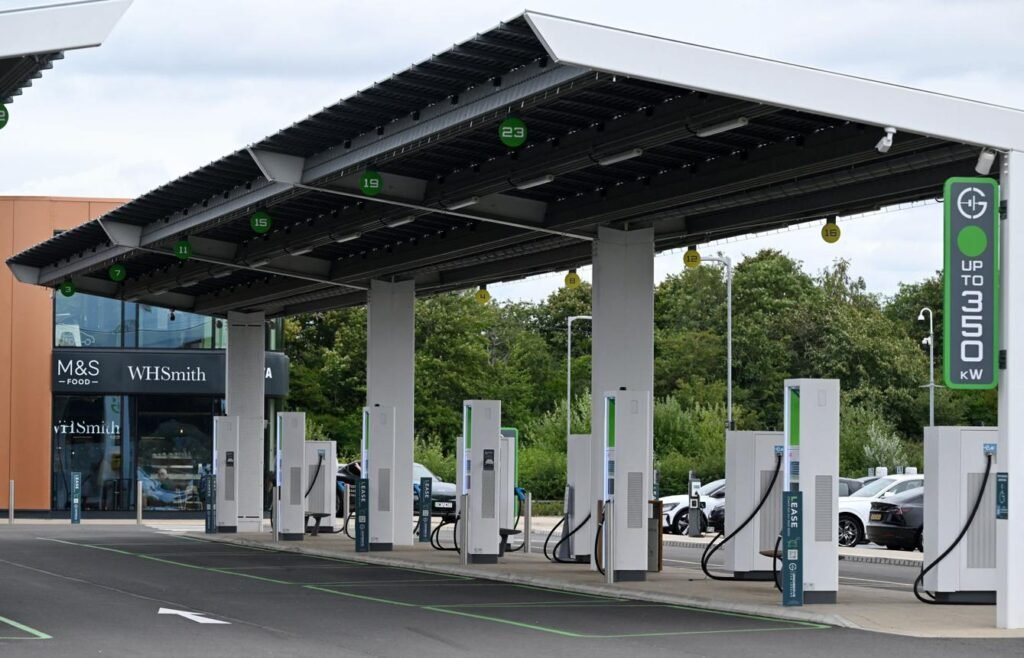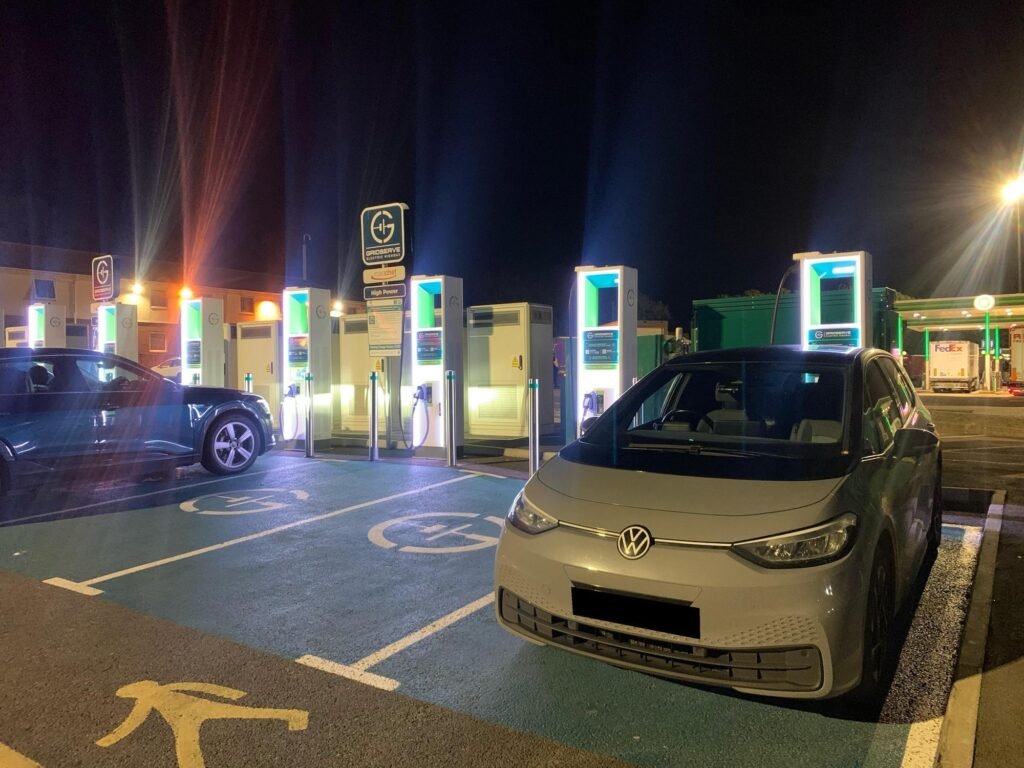
Public EV charging networks have become a critical part of the UK’s transport infrastructure. Thousands of charging points now operate across motorways, retail parks, workplaces and residential areas, helping support the transition to electric vehicles.
As these networks expand, a common question emerges: are public charging networks secure?
The short answer is yes, most major charging networks employ extensive cyber security measures. However, like any connected technology, they are not immune to cyber threats. Public charging infrastructure combines physical hardware, cloud platforms, payment systems, mobile applications and communication networks, creating multiple potential attack surfaces.
The good news is that operators are increasingly treating cyber security as seriously as reliability and availability.
Why Public Charging Networks Are Attractive Targets
Public charging networks process large amounts of valuable data and support services that drivers depend on daily.
Potential targets include:
- Customer payment information
- User account credentials
- Mobile applications
- Charging management platforms
- Remote monitoring systems
- Energy consumption data
- Grid communication systems
Criminal groups often focus on systems that can generate financial gain or operational disruption.
The concerns discussed in Can EV Chargers Be Hacked? highlight how charging infrastructure has become an increasingly attractive target for cyber criminals.

- Gigabit Wi-Fi for 8K Streaming – 5400 Mbps Wi-Fi for faster browsing, streamings, and downloading, all at the same time
- Wi-Fi 6 VPN Router– Equips with the top structure of 4T4R and HE160 on the 5 GHz band to enable a 4.8 Gbps ultra-fast co…
- Connect 100+ Devices– Supports MU-MIMO and OFDMA to reduce congestion and quadruple the average throughput
How Charging Networks Protect Themselves
Encryption
Most major charging providers encrypt communications between chargers, mobile apps and backend systems.
Encryption helps prevent attackers from intercepting sensitive information such as:
- Payment details
- User credentials
- Charging session information
- Remote management commands
Without encryption, attackers could potentially capture data moving across networks.
Secure Payment Processing
Public charging operators generally use the same payment security standards adopted by banks and major retailers.
Security controls typically include:
- PCI DSS compliance
- Tokenised payment data
- Fraud monitoring
- Secure card processing gateways
This reduces the risk of financial information being exposed during charging transactions.
Authentication Controls
Charging operators restrict access to management systems through authentication measures such as:
- Multi-factor authentication
- Role-based access controls
- Account monitoring
- Session management
These controls help prevent unauthorised access to critical infrastructure.
Can Attackers Hack Individual Chargers?
Individual chargers can sometimes contain vulnerabilities.
Examples might include:
- Outdated firmware
- Weak passwords
- Poorly secured maintenance interfaces
- Software configuration errors
However, compromising a single charger does not automatically provide access to an entire charging network.
Modern networks are typically segmented to limit the impact of isolated incidents.
The same security principles discussed in Can Hackers Access Smart Home Energy Devices? apply to charging stations. Any connected device can become vulnerable if updates and security controls are neglected.

What Risks Do Drivers Face?
Fake Charging Apps
Attackers occasionally create fake applications designed to steal login credentials or payment details.
Drivers should:
- Download apps only from official stores
- Verify app publishers
- Enable multi-factor authentication
- Monitor account activity
QR Code Scams
Some criminals place fake QR codes on charging stations.
These codes may redirect users to:
- Fraudulent payment pages
- Malware downloads
- Credential harvesting sites
Always verify that payment instructions match those provided by the charging operator.
- [Fastest Charging in the Industry] – Fully recharge using an AC outlet in only 70 minutes with EcoFlow’s X-Stream fast c…
- [Power 80% of Your Appliances] – With an output of up to 1600W, run 80% off all your appliances, even high wattage ones….
- [LFP Long-Life Battery] – Using LFP battery cells, use and recharge RIVER 2 Pro more than 3000 times before hitting 80%….
Account Takeovers
If a driver’s account password is compromised elsewhere, attackers may attempt to access charging accounts using credential stuffing techniques.
Strong passwords and multi-factor authentication significantly reduce this risk.
Could Charging Networks Affect The Electricity Grid?
Large charging networks increasingly interact with broader energy systems.
Features such as:
- Smart charging
- Load balancing
- Demand response
- Vehicle-to-grid services
create additional connectivity between charging infrastructure and electricity networks.
This does not mean hackers can easily trigger blackouts through charging stations. Energy operators employ multiple layers of protection between public-facing systems and operational technology.
Nevertheless, as EV adoption grows, charging infrastructure becomes part of the wider cyber security discussion surrounding critical national infrastructure.
This concern links closely to issues explored in Could Cyber Attacks Slow the UK’s Net-Zero Plans?, where increasing digitalisation creates new security challenges alongside environmental benefits.
Business Energy Insight: PowerGuardian.co.uk provides analysis of UK energy costs, market trends and factors affecting commercial energy bills.
How Charging Operators Monitor Threats
Continuous Monitoring
Most large operators maintain continuous monitoring of:
- Network traffic
- User activity
- Payment systems
- Device health
- Software performance
Suspicious behaviour can often be identified before significant damage occurs.
Threat Intelligence
Many organisations subscribe to cyber threat intelligence services that provide information about:
- Emerging attack methods
- Vulnerabilities
- Criminal campaigns
- Malware indicators

- Full HD streaming: Logitech C922 provides two streaming qualities to choose from. Whether you’re after full HD 1080p at …
- Multiple mounting options including tripod: This HD streaming webcam comes equipped with a versatile tripod. Mount the U…
- Auto-lighting corrections: Alongside full HD streaming over wifi, this gaming webcam is equipped with autofocus and inst…
Artificial Intelligence
Security teams increasingly use AI-powered monitoring systems to identify unusual behaviour patterns.
As discussed in How Do Energy Companies Use AI to Detect Threats?, machine learning tools can help detect threats faster than traditional rule-based monitoring alone.
How Secure Are UK Public Charging Networks Compared With Other Smart Energy Systems?
Public charging networks generally compare favourably with many other connected energy technologies.
Major charging operators often invest heavily in:
- Security testing
- Software updates
- Incident response planning
- Regulatory compliance
- Third-party audits
The risks are often similar to those affecting smart meters, connected home devices and other internet-enabled energy systems.
Many of the issues explored in Are Smart Meters a Cybersecurity Risk? also apply to charging infrastructure, particularly around data protection and secure communications.

What Drivers Can Do To Stay Safe
Use Trusted Networks
Choose established charging providers with strong reputations and transparent security policies.
Also see: Best Energy Suppliers For EV Owners In The UK at powerguardian.co.uk
Enable Multi-Factor Authentication
If available, always activate multi-factor authentication on charging accounts.
Keep Apps Updated
Updates frequently contain security fixes that protect against newly discovered vulnerabilities.
Verify Payment Requests
Be cautious of unexpected payment prompts, unusual QR codes or requests to enter credentials outside official applications.
Monitor Accounts
Regularly review charging activity and payment records for anything unusual.
Final Thoughts
Public charging networks are generally secure and are becoming more secure as the EV sector matures. Operators recognise that reliability and trust are essential for widespread electric vehicle adoption, making cyber security a major investment priority.
While vulnerabilities can exist, the greatest risks for most drivers come from phishing attacks, fake applications, weak passwords and payment scams rather than sophisticated attacks against charging infrastructure itself.
As the UK’s charging network continues to grow, cyber security will remain a critical part of ensuring that electric vehicles, charging providers and the wider energy system can operate safely and reliably. A curious side effect of progress is that every new convenience arrives with its own security headache. Humans build connected systems, attackers notice, security teams drink more coffee, and the cycle continues.
See the EV Charger Cyber Security Assessment – Assess cyber risks linked to your home or workplace EV charger — WiFi, app control, default passwords, firmware and shared access.