A cyber attack against one energy company can be disruptive. A coordinated attack against multiple energy companies at the same time could become one of the most serious cyber incidents the United Kingdom has ever faced.
The energy sector is deeply interconnected. Electricity suppliers, gas providers, transmission operators, distribution networks, renewable energy companies, smart meter communications providers, energy traders and EV charging operators all rely on complex digital systems. If several organisations were compromised simultaneously, the effects could spread rapidly across the sector.
The good news is that the UK has invested heavily in resilience and contingency planning. The bad news is that attackers only need to find a few weaknesses, while defenders must protect thousands of systems. It is a remarkably unfair arrangement, yet humanity continues to organise critical infrastructure that way.
Why Simultaneous Attacks Are Different
One Company Can Usually Be Supported
When a single company experiences a cyber incident, assistance can be drawn from across the industry.
Cybersecurity specialists, government agencies, suppliers, infrastructure operators and incident response teams can concentrate their efforts on helping one organisation recover.
Business disruption can often be contained while other organisations continue operating normally.

- Gigabit Wi-Fi for 8K Streaming – 5400 Mbps Wi-Fi for faster browsing, streamings, and downloading, all at the same time
- Wi-Fi 6 VPN Router– Equips with the top structure of 4T4R and HE160 on the 5 GHz band to enable a 4.8 Gbps ultra-fast co…
- Connect 100+ Devices– Supports MU-MIMO and OFDMA to reduce congestion and quadruple the average throughput
Multiple Attacks Create System-Wide Risks
A coordinated campaign changes the situation dramatically.
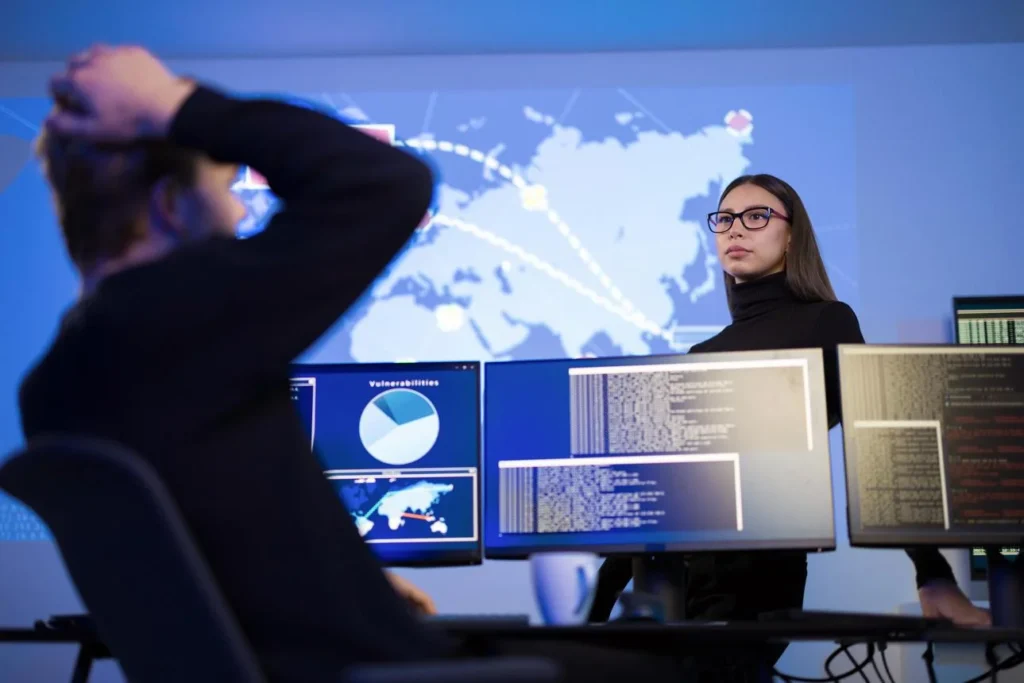
If several major suppliers lost access to critical systems simultaneously, there may not be enough skilled responders available to assist every organisation immediately.
Potentially affected systems could include:
- Customer portals
- Billing platforms
- Trading systems
- Internal communications
- Operational technology networks
- Remote monitoring systems
- Smart meter infrastructure
This is why many experts view coordinated attacks as a greater threat than isolated incidents.
The risks explored in Are Energy Companies Facing More Cyber Threats Than Ever? become significantly more serious when several organisations are targeted at the same time.
Could the Lights Actually Go Out?

Not Automatically
Popular films often portray cyber attacks as instantly plunging entire countries into darkness.
Reality is considerably less dramatic and considerably more complicated.
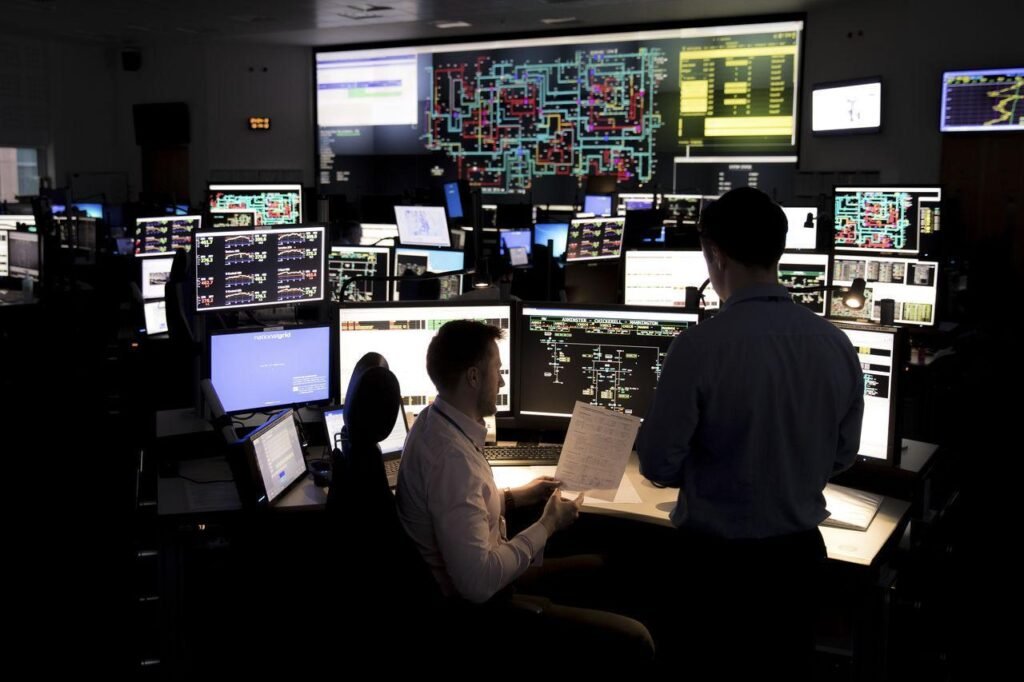
The UK electricity system includes multiple layers of redundancy, protection systems and manual operating procedures. Operators are trained to continue managing essential functions even if some digital systems become unavailable.
However, The Risk Would Increase
If multiple organisations simultaneously lost visibility of their networks, operators could face difficulties:
- Monitoring electricity flows
- Balancing supply and demand
- Managing faults
- Coordinating repairs
- Responding to emergencies
- Maintaining grid stability
Under extreme circumstances, controlled power reductions or regional outages could become necessary to protect the wider electricity network.
A nationwide blackout remains unlikely, but the possibility of localised disruption would increase significantly.
What Would Customers Experience?
Customer Services Could Be Severely Disrupted
The first effects would likely be felt through customer-facing services.
Consumers might encounter:
- Website outages
- Mobile app failures
- Long call centre delays
- Online account problems
- Supplier switching delays
- Payment processing issues
Millions of customers could struggle to access account information.

- Custom three-capsule array: This professional microphone produces clear, powerful, broadcast-quality sound for YouTube v…
- Blue VO!CE software: Elevate your streamings and recordings with clear broadcast vocal sound and entertain your audience…
- Four pickup patterns: Flexible cardioid, omni, bidirectional, and stereo pickup patterns allow you to record in ways tha…
Billing Problems Could Follow
Modern energy billing relies heavily on digital platforms.
If several suppliers suffered ransomware attacks or system outages simultaneously, customers could experience:
- Delayed bills
- Missing statements
- Incorrect balances
- Estimated readings
- Payment disputes
The inconvenience could last weeks or months depending on the severity of the incident.
The Impact on Smart Meters

Smart Meters Would Not Suddenly Stop Delivering Energy
A common misconception is that smart meters control electricity supply directly.
In reality, smart meters primarily provide communication and measurement functions.
Most homes would continue receiving electricity and gas even if communication systems experienced disruption.
Try our Smart Meter Security Checker
Data Services Could Be Affected
A large-scale cyber incident could impact:
- Automatic meter readings
- Consumption reporting
- Remote updates
- Supplier switching processes
- Usage monitoring services
Consumers might temporarily lose visibility into their energy consumption data.
Could Energy Prices Be Affected?
Wholesale Trading Could Become More Difficult
The energy market depends on digital trading platforms and communications systems.
If several major participants lost access simultaneously:
- Trading activity could slow
- Market uncertainty could increase
- Volatility could rise
- Risk premiums could expand
Markets generally dislike uncertainty. Traders dislike it even more, mainly because uncertainty has a habit of becoming expensive.
Recovery Costs Could Be Significant
Following a major cyber incident, companies could face substantial costs:
- System rebuilding
- Cybersecurity upgrades
- Regulatory investigations
- Legal claims
- Customer compensation
- Forensic analysis
Some of these expenses may eventually influence future operational costs.

- SECURITY KEY: Protect your online accounts against unauthorized access by using 2 factor authentication with the Yubico …
- FIDO: The Yubico Security Key NFC is FIDO certified and works with Google Chrome and any FIDO-compliant application on W…
- FITS USB-A PORTS: Once registered, each service will request you to insert the Yubico PC Security Key into a USB-A port …
The Nation-State Scenario
The Most Serious Threat
Many cybersecurity professionals consider sophisticated nation-state actors to be among the most concerning threats.
A hostile government could potentially target:
- Electricity suppliers
- Gas infrastructure
- Renewable generation assets
- Energy trading platforms
- Communications systems
- Critical operational technology
The objective may not be permanent damage.
Temporary disruption, economic uncertainty and reduced public confidence can sometimes achieve strategic goals without physically destroying infrastructure.
This possibility is explored further in Could Cyber Warfare Target Renewable Energy Infrastructure?
How Would The UK Respond?

National Coordination Would Begin Immediately
A large-scale incident would likely involve organisations including:
- National Cyber Security Centre
- National Grid
- Ofgem
- Department for Energy Security and Net Zero
- Emergency planning agencies
These organisations regularly plan and exercise for major infrastructure incidents.
Emergency Procedures Already Exist
The UK energy sector maintains contingency plans covering:
- Communication failures
- IT system outages
- Loss of monitoring capability
- Regional infrastructure disruption
- National emergencies
Many critical operations retain manual fallback procedures specifically because cyber attacks are recognised as a realistic threat.
This resilience is examined in How Prepared Is the UK for Cyber Attacks on Critical Infrastructure?
Lessons From Previous Cyber Incidents
Critical Infrastructure Has Been Targeted Before
Cyber attacks against energy infrastructure have occurred around the world.
These incidents demonstrate that attackers increasingly understand industrial control systems and operational technology environments.
The trend is moving beyond simple data theft towards attempts that could influence real-world operations.
Resilience Is Becoming As Important As Prevention
Modern cybersecurity assumes that some attacks will eventually succeed.
The key questions become:
- How quickly can organisations recover?
- Can essential services continue?
- Can affected systems be isolated?
- Can operations continue manually?
The strongest organisations focus on resilience as much as prevention.
The Future Threat Landscape
Artificial Intelligence Could Increase Attack Scale
AI tools may help attackers:
- Automate reconnaissance
- Generate convincing phishing campaigns
- Identify weaknesses faster
- Coordinate large-scale attacks
Future cyber campaigns could become larger and more sophisticated.

- Full HD streaming: Logitech C922 provides two streaming qualities to choose from. Whether you’re after full HD 1080p at …
- Multiple mounting options including tripod: This HD streaming webcam comes equipped with a versatile tripod. Mount the U…
- Auto-lighting corrections: Alongside full HD streaming over wifi, this gaming webcam is equipped with autofocus and inst…
Defenders Are Also Using AI
Security teams are increasingly deploying AI-driven technologies for:
- Threat detection
- Behaviour analysis
- Incident response
- Vulnerability management
The future discussed in What Does the Future of Energy Cyber Security Look Like? will likely involve a constant technological competition between attackers and defenders.
Final Assessment
A simultaneous cyber attack against multiple energy companies would not automatically shut down Britain’s energy system, but it could create significant disruption across the sector.
Customer services could fail, billing systems could become unavailable, smart meter communications could be interrupted and energy markets could experience increased volatility. In the most serious scenario involving operational technology, regional power disruptions could become possible.
The encouraging reality is that the UK energy sector has spent years strengthening resilience, developing contingency plans and preparing for major cyber incidents. The concern is not whether attackers will continue attempting such operations. The concern is whether defensive capabilities can evolve quickly enough to keep pace.
That question sits at the heart of modern energy cybersecurity. Every year brings smarter attackers, more connected infrastructure and greater dependence on digital systems. A combination that keeps cybersecurity professionals employed and everyone else mildly nervous.