You’re a small business, not a bank with a glass-walled security operations centre and a team of analysts who drink coffee like it’s a competitive sport. So the question isn’t just what’s best, it’s what’s realistic without breaking your business or your sanity.
Here’s the blunt truth: most small UK businesses should outsource the heavy lifting and keep a small amount of control in-house. Not because outsourcing is trendy, but because the numbers and reality keep pointing in that direction.
Why This Decision Actually Matters (More Than You’d Like)
- 43% of UK businesses reported a cyber breach or attack in the last year
- Around 42% of small businesses experienced breaches in 2024 alone
- SMEs are among the most vulnerable due to limited resources and expertise
So this isn’t a “nice to have” decision. It’s closer to choosing whether you want locks on your doors or just optimism.
Option 1: Doing It Yourself (In-House)
Why It Sounds Appealing
Full Control
- You manage everything directly
- No third-party access to your systems
Lower Immediate Costs (On Paper)
- No monthly service contracts
- You use existing staff
Why It Usually Goes Wrong
You Don’t Have a Security Team
You have:
- An IT person
- Or worse… yourself
That’s not cyber security. That’s wishful thinking.
Skills Gap Is a Real Problem
- UK businesses are struggling to hire cyber talent
- Many SMEs simply don’t have the expertise internally
No 24/7 Protection
Cyber criminals:
- Don’t work office hours
- Don’t care about your weekends
You, unfortunately, do.
False Sense of Security
Many SMEs think:
- Antivirus = protected
- Firewall = sorted
That’s like locking the front door and leaving all the windows open.
Option 2: Outsourcing Cyber Security
Why It Works for Small Businesses
Access to Proper Expertise
- Dedicated analysts
- Real-world threat experience
- Up-to-date knowledge
24/7 Monitoring (The Big One)
Outsourced providers:
- Detect threats instantly
- Respond quickly
- Reduce damage
Trying to replicate this yourself would cost… more than your entire IT budget.
Cost Efficiency
Instead of:
- £50k+ salary
- Tools and licences
You pay:
- Predictable monthly fees
For most SMEs, that’s the only reason this conversation even exists.
This Isn’t Just a Trend
- Over 50% of UK businesses already outsource cyber security
- Many do it due to lack of internal skills and hiring challenges
The Downsides (Because Nothing Is Perfect)
You Must Trust a Third Party
- They have access to critical systems
- Poor providers = serious risk
You’re Still Responsible
The Information Commissioner’s Office makes it clear:
You can outsource the work, not the responsibility.
Quality Varies Massively
Some providers:
- Are excellent
Others:
- Barely know more than your current IT setup
Yes, you now have to vet suppliers. Congratulations.
The Hybrid Approach (What Actually Works for Small UK Businesses)

This is the part nobody markets properly because it’s not dramatic.
What You Keep In-House
Basic Controls
- Password policies
- Staff awareness
- Device management
Day-to-Day IT
- User access
- Simple troubleshooting
What You Outsource
The Hard Stuff
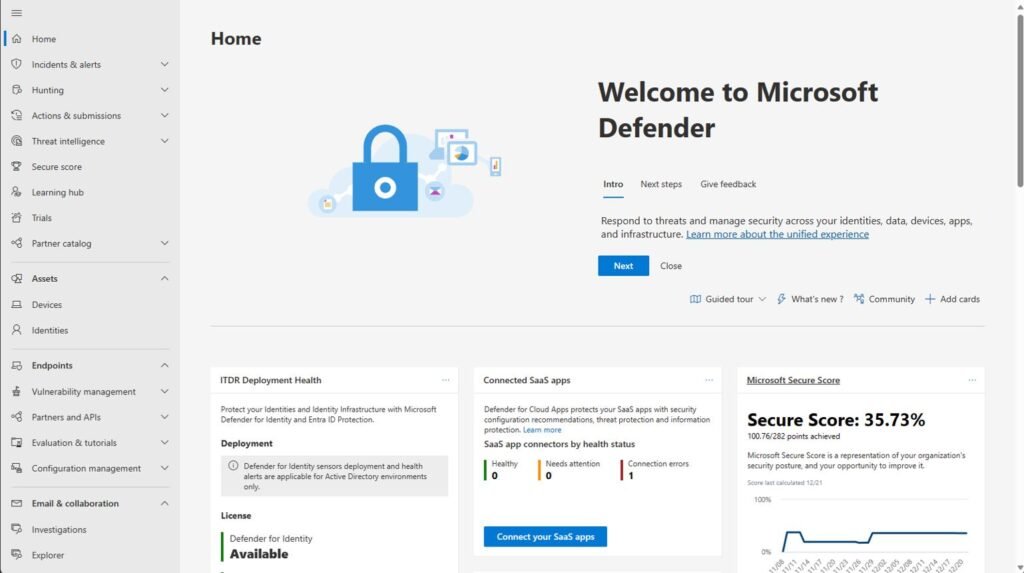
- Threat monitoring
- Incident response
- Advanced protection tools
Why This Model Wins
- You stay in control of your business
- You avoid pretending to be a cyber expert
- You get real protection without massive cost
And crucially:
“No single organisation can defend against the threat on its own”
— National Cyber Security Centre
Even the UK government is basically saying: stop trying to do everything yourself.
Cost Reality (Brace Yourself)
DIY Approach
- Hidden time cost (huge)
- Mistakes (expensive)
- Reactive fixes after incidents
Outsourced (Typical SME Range)
- £300 to £1,500+ per month
- Scales with your business
Real Comparison
| Approach | Short-Term Cost | Long-Term Risk | Realistic Outcome |
|---|---|---|---|
| DIY | Low | High | Eventually breached or overwhelmed |
| Outsourced | Medium | Low | Stable, monitored, predictable |
| Hybrid | Medium | Lowest | Best balance |
What UK Authorities Recommend (Without Saying It Bluntly)
National Cyber Security Centre
- Use expert guidance
- Implement baseline protections
- Don’t ignore cyber risk
Cyber Essentials Scheme
https://www.ncsc.gov.uk/cyberessentials
- UK government-backed baseline
- Required for many contracts
- Works with both outsourced and hybrid models
Department for Science Innovation and Technology
https://www.gov.uk/government/statistics/cyber-security-breaches-survey-2025
- Highlights scale of attacks
- Shows SMEs remain highly targeted
Final Verdict (The Bit You Wanted Simplified)
For a small UK business:
- Doing it all yourself → unrealistic
- Fully outsourcing → good, but risky if unmanaged
- Hybrid approach → best option in almost every case
Summary
Outsource what you don’t understand, don’t have time for, and can’t realistically monitor 24/7.
Keep control of:
- Your staff
- Your processes
- Your basic security habits
Cyber security isn’t a side task. It’s closer to accounting or legal work. You can dabble, but if you fully DIY it, you’re basically waiting for a very expensive lesson.
Not dramatic. Just statistically predictable.
Accelerate Your Learning
We have created Professional High Quality Downloadable PDF’s at great prices for UK Businesses provided to you from our main website. Which include various helpful Cyber related documents and real world scenarios your business might experience, showing what to do and how to protect your business. Find them here.