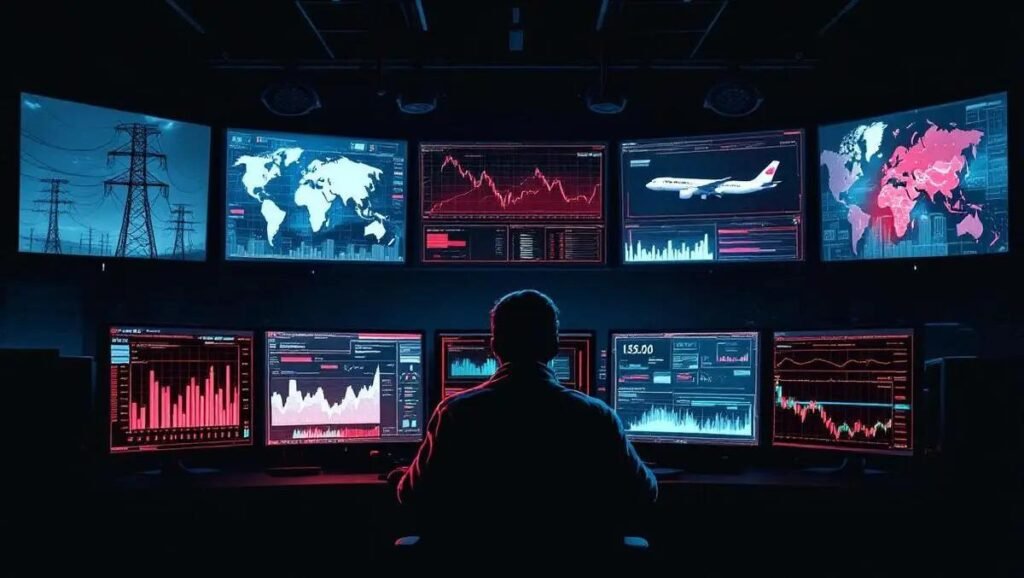
Smart meters were sold to the British public as the future of energy. Automatic readings. No estimated bills. Better tracking of usage. Lower costs. The usual modern promise: “connect everything to the internet and absolutely nothing unexpected will happen”. Humanity really does gamble with enthusiasm.
The reality is more complicated. Smart meters do bring benefits to households and energy suppliers, but they also introduce genuine cybersecurity concerns. The UK’s smart meter network is one of the largest connected infrastructure projects ever attempted in Britain, meaning security is not just a technical issue. It is now part of national infrastructure protection.
The good news is that the UK system is significantly more secure than many people assume. The bad news is that no connected system is ever completely risk-free.
What Is a Smart Meter?
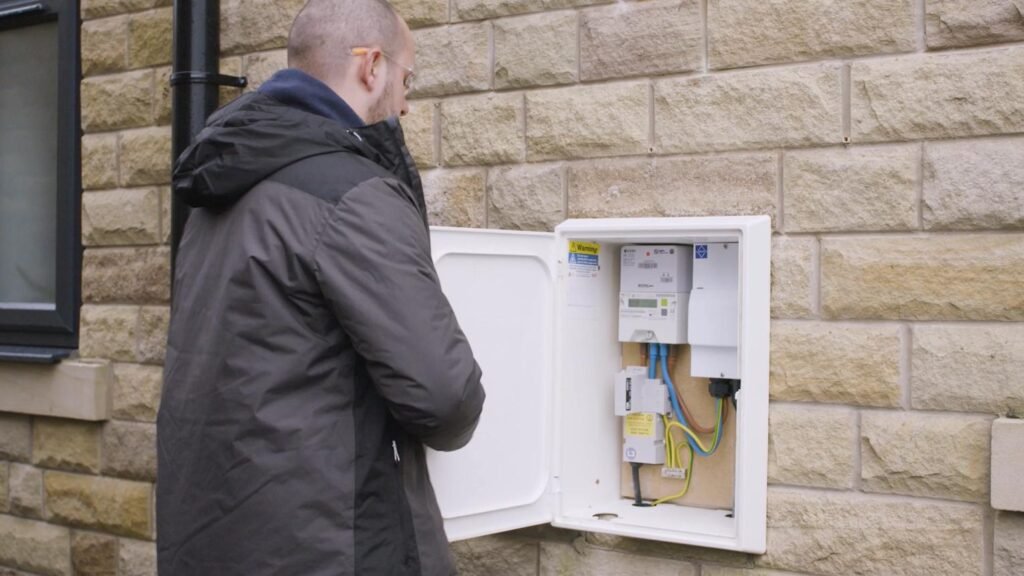
A smart meter is a digital electricity or gas meter that automatically sends usage data to energy suppliers using a secure communications network.
In the UK, most smart meters communicate through the national smart meter infrastructure operated by the Data Communications Company, commonly known as DCC.
Unlike old analogue meters, smart meters can:
- Automatically send readings
- Display live energy usage
- Support time-of-use tariffs
- Allow remote updates
- Enable suppliers to remotely switch some functions
This connectivity is exactly why cybersecurity matters.
Why Cybersecurity Experts Worry About Smart Meters
Millions of Connected Devices Create a Huge Attack Surface
Every connected device increases potential attack opportunities.
The UK smart meter rollout involves tens of millions of devices connected across homes and businesses. That creates what cybersecurity professionals call a “large attack surface”.
If vulnerabilities exist in:
- meter firmware
- communications systems
- supplier platforms
- backend databases
- mobile apps
- update systems
then attackers may attempt to exploit them.
A single compromised laptop is annoying.
A compromised national energy communications platform becomes a national security issue.

Can Hackers Actually Take Over Smart Meters?
In Theory, Yes
In Reality, It Is Extremely Difficult
Cybersecurity researchers worldwide have demonstrated attacks against smart meters over the years.
Examples have included:
- remote manipulation attempts
- firmware exploitation
- interception of wireless communications
- electricity theft techniques
- denial-of-service attacks
However, there is a major difference between:
- hacking an isolated test device in a laboratory
and - successfully compromising large parts of a national smart meter network
The UK smart meter system was designed with multiple layers of security specifically because government and energy firms knew this risk existed from the beginning.

- Installs in circuit panel of most small businesses with clamp-on sensors. Supports single phase, single-split phase, and…
How UK Smart Meters Are Protected
Encryption
UK smart meter communications use strong encryption.
This helps prevent:
- interception of readings
- unauthorised commands
- spoofing attacks
Encryption essentially scrambles data so attackers cannot easily read or alter it.
Without encryption, someone nearby could potentially intercept wireless traffic. With modern encryption properly implemented, that becomes dramatically harder.
Separate National Communications Network
UK smart meters do not simply connect directly to the public internet like a cheap smart plug ordered at 2am by someone convinced their kettle needs artificial intelligence.
Instead, communications route through the DCC’s dedicated infrastructure.
This separation reduces exposure to ordinary internet attacks.
Security Certification Requirements
Meters and associated systems must comply with strict security standards before deployment.
The UK government worked with organisations including:
- National Cyber Security Centre
- Ofgem
- Department for Energy Security and Net Zero
to establish cybersecurity requirements for the rollout.
Real-World Smart Meter Cybersecurity Incidents
Puerto Rico Smart Meter Tampering
One well-known example involved electricity theft schemes in Puerto Rico.
Attackers allegedly manipulated smart meters to reduce recorded usage. Reports suggested the fraud cost millions of dollars.
This was primarily financial fraud rather than a national-grid cyberattack, but it demonstrated that poorly protected systems can be exploited.
Research Demonstrations in Europe and the US
Academic researchers have repeatedly demonstrated vulnerabilities in certain smart meter models worldwide.
Examples included:
- weak authentication
- insecure firmware updates
- exposed debugging interfaces
- poor encryption implementation
Importantly, many of these attacks required:
- physical access
- specialised equipment
- insider knowledge
This is not usually something performed by a random teenager in a bedroom after drinking three energy drinks and discovering a hacking forum.

Could Smart Meters Be Used to Attack the National Grid?
This Is the Big Fear
The nightmare scenario often discussed is:
- attackers compromise huge numbers of smart meters
- they simultaneously disconnect or manipulate devices
- grid instability follows
In theory, coordinated disruption at scale could affect grid operations.
However, experts generally believe this would be extremely difficult in the UK because:
- the infrastructure is segmented
- security controls are layered
- commands are authenticated
- monitoring systems exist
- access is tightly controlled
That said, intelligence agencies worldwide now treat energy infrastructure as a major cyberwarfare target.
The Russia-linked cyberattacks against parts of Ukraine’s power grid demonstrated that energy systems can absolutely be targeted digitally. Those attacks focused more on operational systems than smart meters themselves, but the wider lesson remains important.
Are Smart Meters Spying on People?
The Privacy Concern Is Real
Smart meters collect detailed energy usage information.
Potentially, usage patterns could indicate:
- when people are home
- sleeping habits
- holiday periods
- appliance usage trends
This creates privacy concerns.
In the UK:
- suppliers must follow GDPR rules
- customers control some data-sharing permissions
- half-hourly readings usually require consent
Still, any large-scale data collection system carries risk.
If databases are breached, customer information could potentially be exposed.
Could Criminals Exploit Smart Meters?
Potentially, Yes
Cybercriminals are often financially motivated.
Possible attack goals include:
- energy theft
- fraud
- ransomware against suppliers
- access to wider energy systems
- customer data theft
The biggest practical risks currently tend to involve:
- supplier platform breaches
- phishing attacks
- weak passwords
- third-party software vulnerabilities
rather than attackers directly “hacking the meter” in dramatic Hollywood style.
Reality is usually far less cinematic and far more depressing. Most cyber incidents begin with someone clicking something they absolutely should not have clicked.
What About Smart Meter Remote Disconnect Fears?
Some smart meters can support remote functions.
This has raised fears about:
- remote disconnection abuse
- malicious shutdowns
- supplier misuse
- insider threats
In the UK, strict rules govern remote disconnection processes.
There are also technical safeguards designed to prevent unauthorised commands.
However, cybersecurity experts always consider insider threats seriously because attackers do not always come from outside organisations.

Are Older Smart Meters More Vulnerable?
Sometimes
Like many connected devices, security standards evolve over time.
Older hardware may:
- lack newer protections
- receive fewer updates
- contain legacy vulnerabilities
This is one reason firmware updates and long-term infrastructure maintenance matter enormously.
A device installed today may still be operating in ten or fifteen years.
Cybersecurity ages badly.
Attack techniques improve constantly.
What Does the National Cyber Security Centre Say?
The National Cyber Security Centre has repeatedly stressed the importance of protecting UK critical infrastructure, including energy systems.
The UK smart meter rollout incorporated security design from the outset, including:
- encrypted communications
- security assurance frameworks
- device identity management
- controlled update systems
No serious security professional claims the system is invulnerable.
Instead, the goal is:
- reduce attack likelihood
- detect attacks quickly
- minimise damage
- recover rapidly
That is how modern cybersecurity works everywhere.
Absolute security does not exist.
Only layers of difficulty.
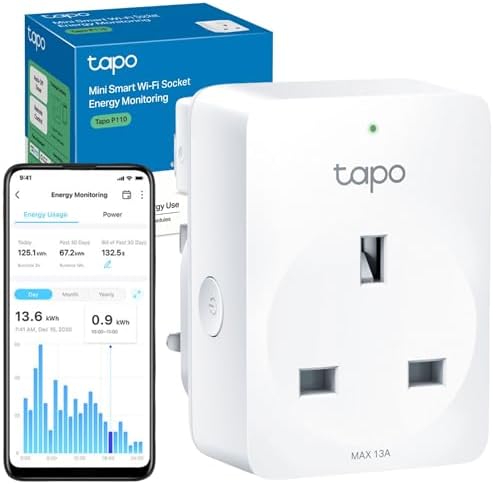
- Energy Monitoring – Monitor the average power consumption of the load for one hour via the Tapo App; Tapo P110 Alexa sma…
- Compatibility – Works with Amazon Alexa and Google Assistant for Voice Control; use your Alexa plug remotely; whenever a…
- Remote Access -Control devices connected to the smart plug wherever you use the free Tapo app on your phone
What Should Households Actually Worry About?
For ordinary households, the realistic risks are usually not dramatic smart-meter takeovers.
More practical concerns include:
- phishing scams pretending to be energy suppliers
- fake smart meter upgrade calls
- supplier account compromise
- leaked personal data
- weak passwords on energy accounts
Consumers should:
- use strong passwords
- enable multi-factor authentication where possible
- ignore suspicious calls or texts
- verify engineer appointments directly with suppliers
- keep home Wi-Fi secure
Ironically, the weakest point in many cybersecurity systems remains humans. A species that still uses “Password123” while storing banking apps beside photos of takeaway menus.
The Bigger Cybersecurity Picture
Smart meters are part of a wider transformation towards:
- smart grids
- connected infrastructure
- renewable energy balancing
- EV charging coordination
- decentralised energy systems
As the UK energy system becomes more digital, cybersecurity becomes increasingly critical.
Future risks may involve:
- AI-assisted attacks
- supply-chain compromises
- state-sponsored cyberwarfare
- attacks on cloud platforms
- vulnerabilities in interconnected smart devices
Smart meters themselves are only one piece of a much larger energy cybersecurity puzzle.
Final Verdict
Are smart meters a cybersecurity risk?
Yes. Any connected infrastructure carries cyber risk.
But the situation is often exaggerated online.
The UK smart meter system was built with far stronger security controls than many consumer smart devices. It uses encryption, dedicated communications infrastructure, authentication systems and government-backed security frameworks.
That does not make it immune from attack.
It simply makes successful large-scale compromise significantly harder.
The real concern is not usually that a hacker will instantly plunge Britain into darkness using your electricity meter like a Bond villain with a spreadsheet addiction.
The bigger issue is that energy infrastructure is becoming increasingly digital, interconnected and attractive to cybercriminals and hostile states.
That means cybersecurity is no longer just an IT issue.
It is now part of national resilience itself.
We have created Professional High Quality Downloadable PDF’s at great prices specifically for Small and Medium UK Businesses. Which include various helpful documents and real world scenarios your business might experience, showing what to do and how to protect your business. Find them here.