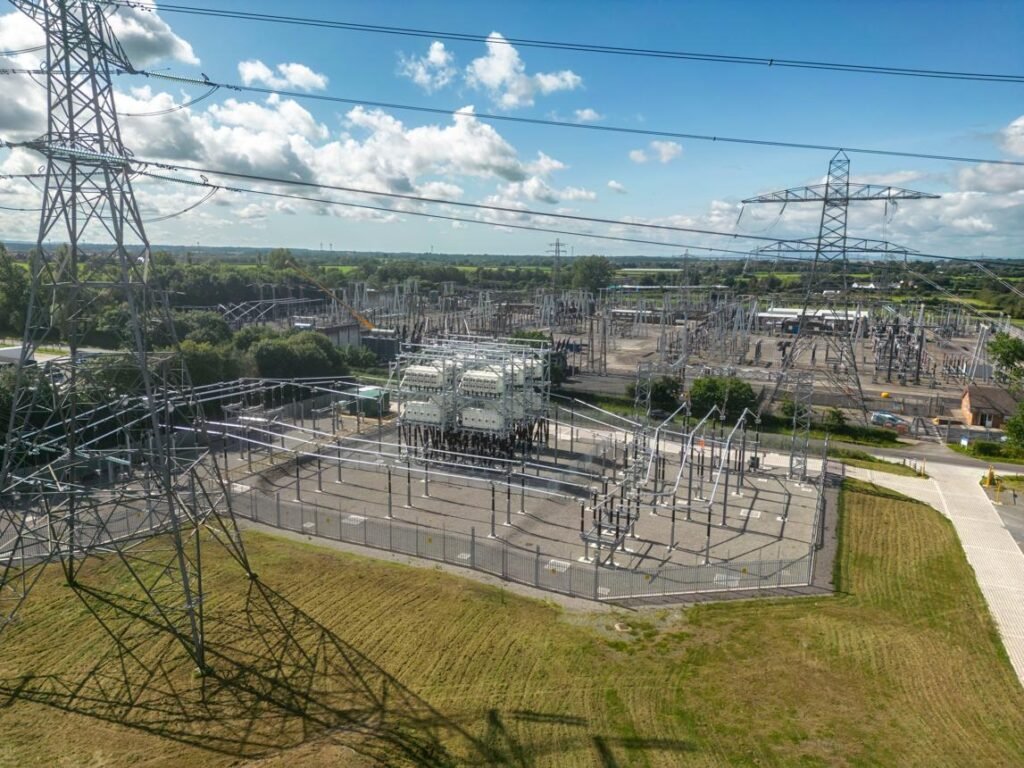
Britain’s Energy Infrastructure Faces a New Wave of Cyber Threats
Britain’s energy sector is entering one of its most significant cyber security periods in years. As electricity networks become increasingly digital and the UK expands renewable energy, battery storage, smart grids and electric vehicle charging infrastructure, cyber security has become as important as physical security.
Recent government announcements, combined with warnings from the UK’s cyber security agencies, show that protecting energy infrastructure is now considered a matter of national security rather than simply IT protection.
A New Government Strategy For Energy Cyber Security
Cyber security becomes central to Clean Power 2030
In May 2026, the UK Government published its new Energy Sector Cyber Security Strategy, developed jointly by the Department for Energy Security and Net Zero (DESNZ), the National Cyber Security Centre (NCSC), Ofgem and the National Energy System Operator (NESO).
The strategy recognises that Britain’s move towards a cleaner, more decentralated and digitally connected energy system is also creating a much larger cyber attack surface.
Its objectives include:
- Improving cyber resilience across the entire energy sector.
- Introducing stronger cyber standards for more energy organisations.
- Increasing operational technology (OT) protection.
- Improving supply chain security.
- Strengthening collaboration between government, regulators and industry.
- Treating cyber resilience with the same importance as operational safety.

Hostile States Continue Targeting Critical Infrastructure
Energy remains a high-value target
The National Cyber Security Centre has warned that hostile nation states continue to target UK critical national infrastructure.
Speaking in June 2026, NCSC Chief Executive Richard Horne revealed that the organisation dealt with more than 200 cyber incidents affecting UK critical infrastructure and its supporting ecosystem during the previous year, with approximately three-quarters believed to be linked to hostile state actors.
Energy infrastructure remains one of the primary targets because disruption can affect millions of homes, businesses and public services simultaneously.
Why The Energy Sector Is Becoming More Vulnerable
Digital transformation creates new opportunities for attackers
Today’s electricity system looks very different from that of a decade ago.
Modern energy infrastructure now includes:
- Smart meters
- Cloud-connected operational systems
- Renewable generation
- Battery storage
- Electric vehicle charging networks
- Remote monitoring equipment
- AI-assisted grid management
- Thousands of third-party suppliers
Every new connected device potentially creates another entry point for attackers if not properly secured.
The challenge is particularly significant because many operational technology systems were originally designed for reliability rather than modern cyber defence.

- MULTI-LAYERED SECURITY HARDWARE: Reputation filtering (IP/DNS/URL) and SecuReporter visibility included in Entry Defense…
- OFFLINE-CAPABLE SETUP AND UPDATES: Configure via Nebula portal wizard; update firmware offline via FTP on the local netw…
- COMPACT FANLESS DESIGN: with SPI 2,000 Mbps firewall throughput, 1,000 Mbps IPS, 500 Mbps VPN, the firewall supports up …
Real-World Lessons Continue To Shape UK Defences
Previous attacks demonstrate what is possible
While the UK has avoided a catastrophic cyber attack on its electricity network, international incidents demonstrate the potential consequences.
The 2021 ransomware attack on the Colonial Pipeline disrupted fuel supplies across large parts of the eastern United States after business systems were compromised.
Earlier attacks against Ukraine’s electricity network showed that cyber attacks can directly interrupt electricity supplies by targeting operational control systems.
These incidents continue to influence UK planning and investment decisions because they demonstrate that cyber attacks can produce real-world disruption rather than simply data theft.

Supply Chains Have Become A Major Concern
Security now extends beyond energy companies
Government strategy increasingly focuses on suppliers rather than only major network operators.
Software vendors, cloud providers, engineering contractors and equipment manufacturers all form part of the energy ecosystem.
A weakness within any supplier may provide attackers with a route into larger organisations.
This is why proposed regulation increasingly expects baseline cyber security controls across a much wider range of Ofgem-licensed organisations, including recognised standards such as Cyber Essentials.
Artificial Intelligence Brings New Opportunities And Risks
AI can strengthen defence while assisting attackers
Artificial intelligence is becoming a double-edged technology.
Energy operators increasingly use AI to:
- Detect abnormal network behaviour.
- Predict equipment failures.
- Prioritise cyber alerts.
- Improve incident response.
- Analyse vast volumes of security data.
However, attackers are also using AI to automate reconnaissance, generate convincing phishing emails and identify vulnerabilities more quickly.
The NCSC has warned that AI is likely to accelerate cyber threats over the coming years while reinforcing that basic cyber hygiene remains the strongest defence.

- Coverage up to 4,000 sq. ft. and for up to 100 devices. Extend coverage up to 2,000 sq. ft. with each additional satelli…
- Ultrafast AX6000 gigabit speed with WiFi 6 technology for uninterrupted streaming, HD video gaming, and web conferencing
- Compatible with any internet service provider up to 2.5Gbps including cable, satellite, fiber and DSL. Connects to your …
What This Means For UK Energy Companies
Cyber resilience becomes a board-level responsibility
Energy companies should expect increasing regulatory scrutiny over the next four years.
Key priorities include:
- Strong identity and access management.
- Network segmentation between IT and operational technology.
- Multi-factor authentication.
- Faster vulnerability management.
- Supply chain assurance.
- Regular incident response exercises.
- Executive-level cyber governance.
Rather than treating cyber security as purely an IT issue, organisations are increasingly expected to demonstrate resilience across their entire business.
Outlook
The UK’s energy transition depends on secure digital infrastructure. Every new renewable energy project, battery installation, smart meter rollout and EV charging network expands the country’s digital footprint.
Government, regulators and industry now recognise that achieving Clean Power 2030 requires cyber resilience to develop alongside new energy infrastructure. Preventing disruption is considerably cheaper than recovering from it, which is one of those rare occasions where common sense and public policy briefly occupy the same room.
References
- UK Government: Energy Sector Cyber Security Strategy
- National Cyber Security Centre (NCSC)
- Department for Energy Security and Net Zero (DESNZ)
- Ofgem
- National Energy System Operator (NESO)
- Reuters: UK critical infrastructure cyber incidents (June 2026)