Spoofing is one of the most common tactics used in cyber crime today. It is simple in concept, devastating in effect, and increasingly sophisticated. In the UK alone, impersonation and spoofing scams cost individuals and businesses hundreds of millions of pounds each year.
Below is a clear, real-world explanation of what spoofing is, how it works, and the harm it causes to both people and computer systems.
What Is Spoofing?
Spoofing is when a criminal pretends to be someone or something trusted in order to trick a victim.
That “something” could be:
- A bank
- A government department
- A company email address
- A known phone number
- A legitimate website
- Even another computer on a network
In simple terms, spoofing is digital impersonation.
The UK’s National Cyber Security Centre (NCSC) describes spoofing as a form of impersonation used to make malicious communication appear legitimate.
Official guidance:
https://www.ncsc.gov.uk/guidance/phishing
The Main Types of Spoofing
1️⃣ Email Spoofing

How it works:
A criminal sends an email that appears to come from:
- Your bank
- HMRC
- Your employer
- A supplier
- A delivery company
The email address may look almost identical to the real one (for example: support@barclayz.co.uk instead of support@barclays.co.uk).
Technically, attackers manipulate email headers or use insecure mail servers that allow sender address forgery.
UK advice from Action Fraud:
https://www.actionfraud.police.uk/a-z-of-fraud/phishing

Damage caused:
- Stolen login credentials
- Bank fraud
- Identity theft
- Business invoice fraud (often called CEO fraud or Business Email Compromise)
According to the UK Finance Annual Fraud Report:
https://www.ukfinance.org.uk/policy-and-guidance/reports-publications/fraud-the-facts
Authorised push payment (APP) scams — often involving spoofed emails — cost UK victims hundreds of millions of pounds annually.
2️⃣ Caller ID (Phone) Spoofing

How it works:
Criminals manipulate telephone systems so that your phone displays:
- Your bank’s official number
- HMRC
- A police station
- Even your own number
The call looks genuine — but it is fake.
The UK regulator Ofcom warns that spoofing technology makes scam calls look authentic.
https://www.ofcom.org.uk/phones-and-broadband/scam-calls-and-messages
Damage caused:
- Victims transferring money directly to criminals
- Disclosure of banking passwords or one-time codes
- Emotional distress, especially among elderly victims
Real-world example: criminals spoofing bank numbers to convince victims to “move money to a safe account”.
3️⃣ Website Spoofing (Fake Websites)

How it works:
Attackers create websites that look almost identical to:
- Banks
- PayPal
- Amazon
- Government services
The web address may differ by just one character.
Victims enter their login details, which go straight to criminals.
The National Cyber Security Centre warns that criminals can obtain free SSL certificates, meaning even fake websites may show a padlock symbol.
Reference:
https://www.ncsc.gov.uk/guidance/avoiding-phishing-attacks
Damage caused:
- Account takeover
- Fraudulent purchases
- Malware installation
- Data theft
4️⃣ IP & Network Spoofing
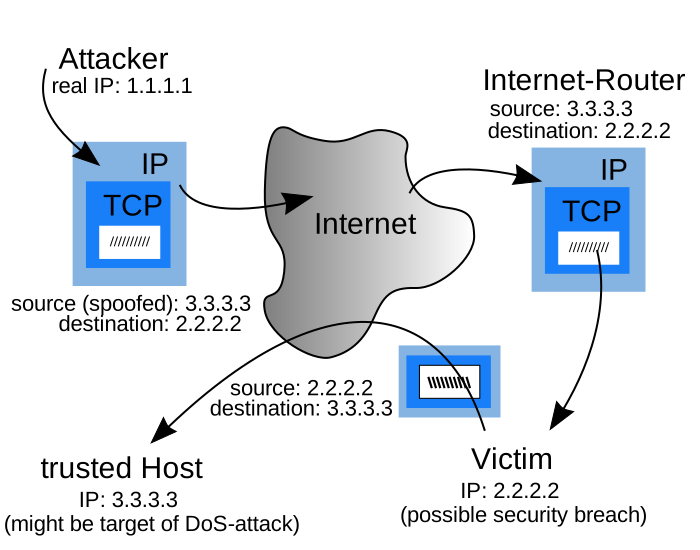
How it works:
In more technical attacks, criminals forge the source IP address of data packets. This can:
- Hide their identity
- Bypass security filters
- Launch DDoS (Distributed Denial of Service) attacks
DDoS attacks overwhelm servers, knocking websites offline.
The NCSC explains IP spoofing in network attacks here:
https://www.ncsc.gov.uk/guidance/denial-service-attacks
Damage caused to computers:
- System crashes
- Website downtime
- Corrupted data
- Business interruption
- Infrastructure failure
For businesses, this can mean thousands of pounds lost per hour.
Real-World Impact in the UK
According to UK Finance:
- Fraud losses in the UK banking sector reach hundreds of millions of pounds annually
- Most scams begin with some form of impersonation or spoofing
Report link:
https://www.ukfinance.org.uk/data-and-research/research-reports/fraud-the-facts
The National Crime Agency has repeatedly warned that spoofing is a gateway tactic used by organised crime groups.
https://www.nationalcrimeagency.gov.uk
Expert View
The NCSC states:
“Criminals rely on impersonation and urgency to pressure victims into making mistakes.”
Cyber security researchers at UK universities frequently highlight that spoofing succeeds not because technology is weak — but because trust is exploited.
Spoofing attacks are effective because:
- They appear familiar
- They trigger fear or urgency
- They bypass human judgement
What Damage Does Spoofing Do to People?
Financial Damage
- Direct theft
- Drained savings
- Business losses
Psychological Damage
- Stress
- Anxiety
- Loss of trust
- Embarrassment
Identity Damage
- Credit score harm
- Fraudulent loans taken in victim’s name
Action Fraud support advice:
https://www.actionfraud.police.uk/
What Damage Does Spoofing Do to Computers & Networks?
- Malware infection
- Ransomware deployment
- Data corruption
- System outages
- Reputational damage to organisations
In corporate environments, spoofing often acts as the entry point for larger cyber attacks.
Why Spoofing Is So Dangerous
Spoofing is dangerous because it:
- Looks legitimate
- Is cheap for criminals to execute
- Scales globally
- Exploits human behaviour rather than software flaws
In many cases, the victim does not realise anything is wrong until the damage is already done.
How to Protect Yourself
✔ Always verify unexpected requests for money
✔ Do not trust caller ID alone
✔ Check email addresses carefully
✔ Type website addresses manually
✔ Enable multi-factor authentication
✔ Report suspicious activity to Action Fraud
Final Thoughts
Spoofing is not just a technical trick — it is a psychological attack wrapped in technology.
It damages:
- Individuals financially and emotionally
- Businesses operationally
- Computer systems technically
- Society through erosion of trust
The most powerful defence is awareness combined with layered security controls.
We have created Professional High Quality Downloadable PDF’s at great prices specifically for Small and Medium UK Businesses our main website. Which include various helpful Cyber related documents and real world scenarios your business might experience, showing what to do and how to protect your business. Find them here.