Britain Moves to Defend an Increasingly Digital Power System
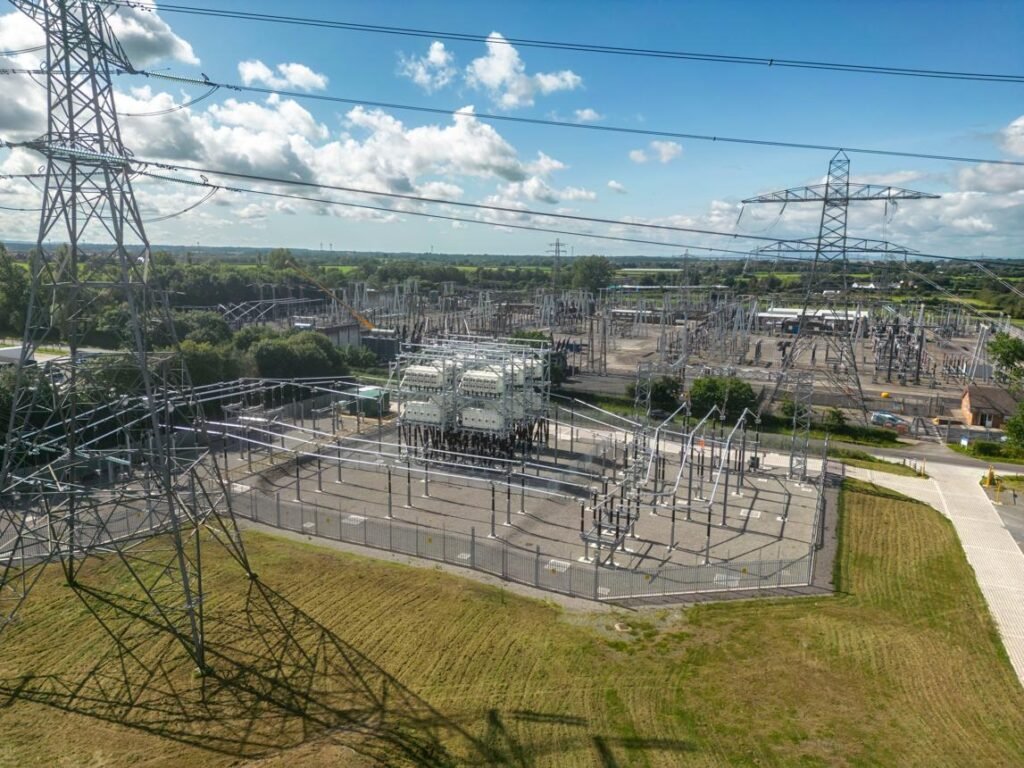
Britain’s electricity and gas infrastructure is becoming more digital, distributed and interconnected. Smart meters, renewable generators, batteries, electric vehicle chargers, heat pumps, cloud platforms and artificial intelligence systems are all becoming part of the country’s energy network.
That modernisation can make the energy system cleaner and more efficient. It also creates thousands of additional devices, software services, remote connections and suppliers that attackers may attempt to exploit.
The latest UK developments show that cyber security is no longer being treated as an isolated IT problem. It is becoming a fundamental part of energy security, national resilience and the day-to-day operation of essential services.
The cyber threat to UK critical infrastructure is increasing
The National Cyber Security Centre reported that it handled more than 200 cyber incidents affecting UK critical national infrastructure and its supporting organisations during the year to May 2026. Approximately three-quarters were believed to have some connection to state actors. (National Cyber Security Centre)
Critical national infrastructure includes systems and services whose failure could seriously affect national security, public safety, the economy or everyday life. Energy is among the most important because almost every other essential service depends on reliable electricity.
Hospitals need power for medical equipment. Water companies need electricity for treatment and pumping. Telecommunications networks depend on powered exchanges, mobile masts and data centres. Supermarkets need refrigeration, electronic payment systems and logistics platforms.
An attack does not have to produce a nationwide blackout to cause serious damage. Disruption to billing systems, customer support, field engineering, fuel deliveries, power trading or network monitoring could create financial losses and operational delays while electricity continues to flow.
The central question is therefore not simply whether attackers could switch off the grid. It is whether energy organisations could continue providing essential services while their digital systems were being disrupted, manipulated or investigated.
The UK publishes a new Energy Sector Cyber Security Strategy
In May 2026, the Department for Energy Security and Net Zero published an updated Energy Sector Cyber Security Strategy for Great Britain.
The strategy establishes a clearer national direction for protecting electricity and gas infrastructure while the energy system becomes more digital. It covers collaboration between government, regulators, energy operators and the wider supply chain. (GOV.UK)
Its objectives include improving regulatory oversight, strengthening cyber assurance, expanding the organisations covered by security requirements and developing a workforce capable of protecting modern energy technology.
By the end of 2026, the government intends to strengthen regulatory capacity through access to assured industry providers. By the end of 2027, relevant operators are expected to be designated under the Network and Information Systems regulatory framework where existing legal powers permit. (GOV.UK)
This matters because the energy system is no longer controlled only by a small number of large power stations and network operators. Important energy functions can now be influenced by software companies, data platforms, equipment manufacturers, cloud providers, electricity aggregators and smart-device operators.
A security weakness in one of those supporting organisations could provide a route into a much larger energy company. The supply chain, as ever, offers attackers the useful convenience of entering through the door nobody remembered to lock.
What stronger cyber assurance means in practice
Cyber assurance gives operators and regulators evidence that security measures genuinely work rather than merely appearing in a policy document.
For an electricity network company, assurance could include testing whether engineers’ remote-access accounts are protected by multi-factor authentication, confirming that operational networks are separated from ordinary office systems and checking whether malicious activity can be detected quickly.
It may also involve examining whether backup systems can be restored, whether suppliers report vulnerabilities and whether the organisation can operate important equipment manually during a prolonged technology failure.
This is particularly important in operational technology environments, where computer systems monitor or control physical processes. Unlike a normal office laptop, an industrial controller may operate a substation, turbine, compressor, safety mechanism or power-management system.
The NCSC warns that many security controls found in modern IT systems are absent from older operational technology. Legacy equipment may lack modern authentication, access control and exploit-protection capabilities. (National Cyber Security Centre)
Britain prepares for severe cyber attacks
In April 2026, the NCSC warned organisations that severe cyber threats should be treated as credible and pressing business risks.
Its guidance emphasised that leaders must prepare their organisations to continue delivering essential services during sustained cyber pressure. It also made clear that this preparation is a responsibility for senior leadership rather than something that can be handed entirely to an IT department. (National Cyber Security Centre)
For energy companies, preparation should include scenarios in which email, cloud services, customer databases or remote-management systems are unavailable for several days.
A realistic exercise could ask:
- Can engineers reach substations without relying on cloud-based scheduling?
- Can customer emergencies be handled if call-centre systems fail?
- Can operators distinguish a genuine grid fault from manipulated data?
- Can critical equipment continue running without external vendor access?
- Can the organisation communicate securely if normal email is compromised?
The purpose is not to predict the exact attack. It is to discover which essential activities depend on technology that has no practical replacement.
Real-world example: the Transport for London attack
Transport for London is not an energy operator, but its 2024 cyber incident provides a useful example of how an attack on critical infrastructure can create extensive operational and financial consequences without physically destroying equipment.
Attackers gained access after impersonating an employee. The resulting disruption affected internal systems and the Oyster photocard service. TfL later estimated that the incident cost approximately £29 million. Two individuals associated with the Scattered Spider cybercrime group were sentenced in July 2026. (Financial Times)
The important lesson for energy organisations is the method of entry. Attackers did not need to break sophisticated encryption or develop a previously unknown piece of malware. They exploited identity and trust.
Energy companies employ thousands of staff, contractors and suppliers. An attacker who successfully impersonates an engineer, helpdesk employee or technology provider may be able to persuade staff to reset a password, approve a login or provide remote access.
Identity verification therefore matters as much as firewalls.
Russian state-backed groups continue targeting infrastructure
The NCSC and international partners issued a warning in July 2026 concerning a Russian intelligence-backed threat group commonly known as Berserk Bear, Static Tundra or Ghost Blizzard.
The group has reportedly targeted vulnerable network infrastructure, including routers, across communications, energy, defence, healthcare and financial organisations. Its techniques include scanning exposed network-management services and exploiting known vulnerabilities in networking equipment. (IT Pro)
Routers and other network devices are attractive targets because they sit at critical points between systems. If compromised, they may allow attackers to observe traffic, steal credentials, redirect communications or establish a persistent route into an organisation.
See our Downloadable PDF: Cyber Criminals Are Making Big Threats To Destroy Your Business What Do You Do?
Older infrastructure is particularly dangerous when manufacturers no longer provide security updates. Equipment may continue working perfectly from an operational perspective while containing publicly documented weaknesses.
This creates a difficult problem for energy companies. Replacing operational equipment can be expensive, disruptive and technically complicated. Some systems are expected to remain in service for decades, rather longer than the average software company’s attention span.
Why hostile states target energy networks
State-backed attackers may have several objectives.
They may conduct espionage to understand how Britain’s energy system operates. They may steal information about network weaknesses, engineering processes or emergency arrangements. They may also establish access that could be used later during a political or military crisis.
An attacker does not necessarily need to cause immediate disruption. Quietly maintaining access to a supplier, router or management system may be more strategically valuable.
The NCSC has stated that the expanding scope of hostile activity and previous attacks against European energy infrastructure demonstrate that cyber security is part of national defence. (National Cyber Security Centre)
In July 2026, the UK also announced sanctions against 24 people and organisations associated with Russian cyber and hybrid operations. The measures included individuals alleged to have links to Russia’s military intelligence services. Russia rejected the accusations. (Reuters)
Smart energy devices move into the regulatory spotlight
One of the most important recent developments concerns large-load controllers.
These are systems capable of controlling substantial amounts of electricity demand. They can include platforms managing fleets of electric vehicle chargers, batteries, heat pumps, industrial equipment or other flexible energy devices.
In June 2026, the government opened a consultation on a proposed Cyber Assessment Framework profile for these controllers. The proposals form part of the Smart Secure Electricity Systems Programme and support plans to bring relevant operators within the Network and Information Systems regulatory framework. (GOV.UK)
See Smart Devices at PowerGuardianUK
Why large-load controllers could affect the grid
A single domestic EV charger has a relatively small effect on the national electricity system. A platform simultaneously controlling hundreds of thousands of chargers is a different matter.
If an attacker compromised such a platform, they might attempt to switch large numbers of devices on or off at the same time. A sudden, coordinated change in electricity demand could complicate grid balancing and place stress on local networks.
Similar risks could arise from aggregated batteries or heating systems. Individually, each device may appear insignificant. Collectively, they can behave like a virtual power station or a very large industrial consumer.
Security requirements must therefore consider:
- How devices authenticate with the controller
- How software updates are verified
- Whether commands can be limited or cancelled
- How abnormal mass switching is detected
- Whether local devices remain safe when communications fail
- How quickly compromised credentials can be revoked
This is an example of cyber security policy adapting to the decentralised energy system. The organisations capable of influencing national demand may not be traditional utilities, yet their software can still affect electricity-system stability.
Artificial intelligence creates opportunities and new risks
Ofgem launched a call for input on AI assurance in the energy sector in June 2026. The regulator is examining how AI systems should be tested, evaluated and governed when used within energy services. (Ofgem)
Energy companies are already exploring AI for demand forecasting, equipment maintenance, customer service, fraud detection, trading and network planning.
These uses could improve efficiency. An AI system might detect early signs of transformer failure, identify unusual electricity consumption or forecast renewable generation more accurately.
However, AI can also introduce risks when organisations cannot explain how a system reached a decision, verify the quality of its data or identify deliberate manipulation.

How an AI energy system could be attacked
An attacker might corrupt the data used to train or operate an AI model. This is sometimes called data poisoning.
For example, manipulated sensor readings could cause a maintenance system to underestimate the risk of equipment failure. False market data might distort a trading recommendation. Carefully crafted customer requests could persuade an automated support tool to reveal information or perform an unauthorised action.
AI systems also depend on conventional technology such as cloud platforms, application programming interfaces, databases and user accounts. The system may be described as artificial intelligence, but attackers can still compromise it using painfully ordinary methods such as stolen passwords, exposed keys and badly configured storage.
AI assurance must therefore examine the complete service rather than only the model. This includes data sources, human oversight, suppliers, system permissions and procedures for safely disabling automation.
To learn more about AI Energy go to AI Energy Intelligence UK
Open energy data needs careful protection
Ofgem is also consulting on how open energy data should be assessed before publication.
Open data can help researchers, developers and businesses create useful services. It can improve understanding of network capacity, electricity demand, renewable generation and investment requirements.
However, combining several harmless-looking datasets may reveal information that could be useful to attackers. Detailed data about equipment, demand patterns, network constraints or asset locations could potentially expose operational weaknesses.
Ofgem’s May 2026 consultation acknowledges that energy data exists on a spectrum from open to shared and closed. It seeks to improve how organisations decide what information can be published safely. (Ofgem)
The mosaic effect
The danger is sometimes described as the mosaic effect.
One dataset may show the approximate location of energy assets. Another may show capacity constraints. A third may reveal planned maintenance. Individually, none appears especially sensitive.
When combined, they could help someone identify where the system is most vulnerable, when equipment is operating with reduced resilience or which site would be most disruptive to target.
This does not mean energy data should be locked away. It means publication decisions must consider how information could be combined with other publicly available material.
Legacy technology remains a serious weakness
Research published in 2026 found that 77% of utility organisations surveyed had experienced attacks involving outdated software or legacy equipment for which patches were unavailable or difficult to deploy. (energylivenews.com)
Industrial systems often remain in service for much longer than ordinary business technology. Equipment may be reliable, certified and deeply integrated into physical processes, making replacement risky and expensive.
Operators may also be unable to install updates immediately because restarting a system could interrupt an essential service.
How energy companies can protect unpatchable equipment
Where replacement or patching is not immediately possible, operators can reduce risk through additional protective layers.
Legacy systems should be isolated from ordinary corporate networks. Remote access should be restricted, monitored and enabled only when required. Network traffic should be analysed for unusual behaviour, and unused services should be disabled.
Organisations also need an accurate inventory of operational assets. Security teams cannot protect equipment they do not know exists.
A useful inventory should record the device, manufacturer, software version, physical location, network connections, responsible owner and operational importance.
Without that information, emergency vulnerability warnings become a frantic search through substations and spreadsheets. A thrilling administrative spectacle, except that electricity depends on the outcome.

- MULTI-LAYERED SECURITY HARDWARE: Reputation filtering (IP/DNS/URL) and SecuReporter visibility included in Entry Defense…
- OFFLINE-CAPABLE SETUP AND UPDATES: Configure via Nebula portal wizard; update firmware offline via FTP on the local netw…
- COMPACT FANLESS DESIGN: with SPI 2,000 Mbps firewall throughput, 1,000 Mbps IPS, 500 Mbps VPN, the firewall supports up …
Cyber regulation is expanding beyond traditional energy operators
The government is reshaping the regulatory framework for downstream gas and electricity as part of wider reforms under the Cyber Security and Resilience legislation.
The proposed changes are intended to address weaknesses in the existing Network and Information Systems regime and reflect the increasing dependence of essential services on external technology providers. (GOV.UK)
This could place stronger obligations on managed service providers, data centres and important suppliers whose failure could disrupt regulated operators.
The policy recognises an uncomfortable reality: an energy company can invest heavily in its own security and still be compromised through a poorly protected contractor.
Supply-chain security becomes operational security
Energy operators need to understand which suppliers can access critical systems, process sensitive data or remotely modify equipment.
Contracts should define security requirements, incident-reporting deadlines, access controls, vulnerability-management responsibilities and arrangements for ending the relationship.
The operator must also consider what happens if a major supplier becomes unavailable.
Can the service be transferred? Can the organisation operate temporarily without it? Are configurations and technical records held somewhere accessible? Does the supplier have exclusive knowledge that nobody inside the energy company possesses?
These are business-continuity questions as much as cyber security questions.
What UK energy organisations should do now
The latest developments point towards several practical priorities.
Identify the genuinely essential services
Organisations should define which functions must continue during a severe cyber incident.
This should extend beyond electricity generation or network control. It may include emergency communications, customer safeguarding, field-engineer deployment, fuel management and regulatory reporting.
Separate operational and business networks
Office systems should not provide an unrestricted route into operational technology.
Segmentation cannot prevent every incident, but it can stop a compromised email account or employee laptop from immediately exposing industrial systems.
See the: UK Small Business Cyber Survival Kit
Strengthen identity controls
Multi-factor authentication should protect remote access, privileged accounts, cloud platforms and important supplier connections.
Helpdesk staff should use strong identity-verification procedures before resetting accounts or enrolling new authentication devices.
Test manual and degraded operations
Operators should practise continuing essential work when digital platforms are unavailable.
Plans that exist only as documents tend to reveal their flaws at the least convenient moment. Exercises should include technical staff, executives, communications teams, suppliers and operational personnel.
Monitor suppliers continuously
Supplier security should not be assessed only at the start of a contract.
Organisations need updated information about vulnerabilities, ownership changes, subcontractors, remote-access arrangements and incident history.
Prepare for destructive attacks
Backups should be isolated, tested and capable of supporting the restoration of essential systems. Organisations should assume attackers may deliberately delete data, disable security tools and target recovery infrastructure.
What this means for UK households
Most consumers will never interact directly with the industrial systems discussed in government strategies. Nevertheless, their homes are becoming part of the digital energy system.
Smart meters, EV chargers, solar inverters, batteries and heat pumps may communicate with manufacturers, energy suppliers or flexibility-service providers.
See our Solar & Battery Cyber Security Checker Tool
Consumers should install software updates, use unique passwords and enable multi-factor authentication where available. They should also check how long manufacturers promise to provide security support.
The cheapest connected device is not necessarily a bargain if its software is abandoned after two years.
Households should also be cautious about granting third-party applications access to energy accounts or smart devices. Permissions should be removed when a service is no longer used.

- Works with 1000+ Accounts: Compatible with Google, Microsoft, and Apple. A single Security Key NFC secures 100 of your f…
- Fast & Convenient Login: Plug in your Security Key NFC via USB and tap it, or tap it against your phone (NFC) to authent…
- Trusted Passkey Technology: Uses the latest passkey standards (FIDO2/WebAuthn & FIDO U2F) but does not support One-Time …
The outlook for UK cyber energy security
Britain is entering a period in which energy security and cyber security can no longer be separated.
The electricity system will rely increasingly on software-controlled demand, distributed generation, cloud services, connected appliances and AI-supported decisions. This can improve efficiency and help integrate renewable energy, but it increases the number of organisations and technologies capable of affecting essential services.
The UK’s new strategy, regulatory consultations and NCSC warnings demonstrate that the government recognises the scale of the challenge.
Success will depend on implementation. Strategies must produce secure equipment, tested recovery plans, better supply-chain oversight and genuine investment in operational resilience.
Cyber attacks against energy infrastructure are no longer hypothetical scenarios reserved for technical conferences. They are part of the operating environment facing utilities, regulators, manufacturers and government.
The objective is not to build a system that can never be attacked. No connected system can offer that guarantee.
The objective is to ensure that Britain can continue generating, transporting and supplying energy even when parts of its digital infrastructure are under sustained attack.
Reference Material and Research
UK Government
- Energy Sector Cyber Security Strategy: The government’s 2026 strategy for protecting Great Britain’s increasingly digital electricity and gas system. (GOV.UK)
- Large Load Controllers: Tier 1 Cyber Assessment Framework: Proposed security requirements for systems controlling large amounts of electricity demand. (GOV.UK)
- Reshaping Cyber Regulation in Downstream Gas and Electricity: Consultation covering reforms to the energy cyber-security regulatory framework. (GOV.UK)
National Cyber Security Centre
- Preparing for Severe Cyber Threat: Why Leaders Must Act Now: Guidance on maintaining essential services during sustained cyber pressure. (National Cyber Security Centre)
- Operational Technology Security Guidance: NCSC principles and practical guidance for securing industrial and operational systems. (National Cyber Security Centre)
- NCSC Critical National Infrastructure Incident Report: Details of more than 200 incidents managed during the year to May 2026. (National Cyber Security Centre)
- Cyber Assessment Framework 4.0: The latest NCSC framework for assessing the resilience of essential services. (National Cyber Security Centre)
Ofgem
- AI Assurance in the Energy Sector: Ofgem’s examination of how AI systems should be tested, evaluated and governed. (Ofgem)
- Securing Open Data in Energy: Consultation on safely publishing energy-sector data. (Ofgem)
- Futureproofing Cyber Regulation: Ofgem’s explanation of changes required to modernise energy cyber regulation. (Ofgem)
If you want to know more about The Energy Sector, energy infrastructure could affect electricity supplies, smart meters, customer services, EV charging networks and critical national systems, find out more.