The honest answer
For ordinary criminals, hacking a social media account in England is often not technically difficult. What makes it work is usually not elite coding genius, because that would require effort, but familiar weaknesses: reused passwords, phishing messages, stolen login details from earlier data breaches, weak recovery settings, and people being tricked into handing over one-time codes. Action Fraud says social media and email account hacking was the most reported cybercrime in its 2025 warning, with 35,434 reports for 2024, up from 22,530 in 2023, and losses of nearly £1 million.
That does not mean every account is easy to break into. A well-secured account with a unique password, strong recovery settings, and properly configured two-step verification is much harder to take over. The NCSC says two-step verification makes it much harder for attackers to access an account even if they know the password, and its updated guidance stresses that some MFA methods are stronger than others against phishing.
Why England is not special, but the risk is still very real
There is no separate technical category called an “English social media account”. A Facebook, Instagram, X, TikTok or LinkedIn account used in England is exposed to the same attack methods seen globally. What is specific to England is the victim pool, the language, the fraud themes, and the reporting picture. UK reporting and government survey data show phishing and social engineering remain common attack routes across the wider UK threat landscape, which fits closely with how social media accounts are stolen in practice.
What methods are used to hack social media accounts?
1. Phishing messages and fake login pages
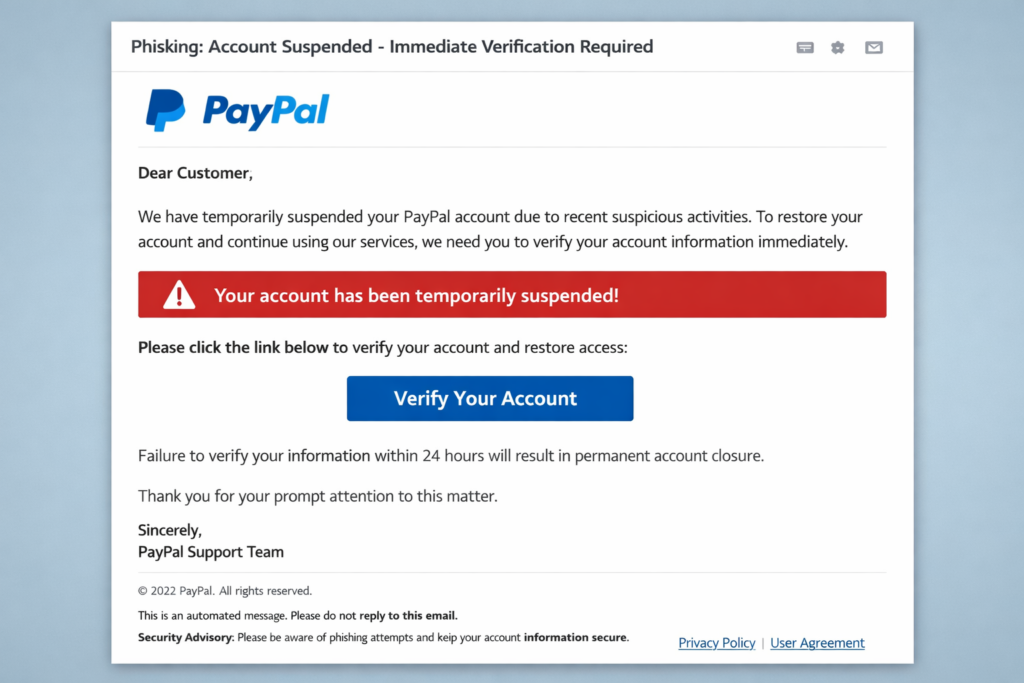
This is still the workhorse method. Victims get a message that appears to come from the platform, a brand, or even a friend. It might claim there is a copyright issue, a blue-tick problem, a suspicious login, a prize, or an urgent request to “secure” the account. The victim clicks through to a fake login page and types in their username, password, and sometimes their one-time code too. The attacker then logs in for real. NCSC guidance identifies phishing as a major threat, and the UK Government’s Cyber Security Breaches Survey 2025 found phishing remained the most prevalent and disruptive type of breach or attack reported by organisations. Verizon’s 2025 EMEA findings also say phishing appeared in 19% of breaches in the region.
Action Fraud’s 2025 warning explicitly says one common hacking method involves account details being obtained through phishing scams. That matters because once a victim types credentials into the wrong page, the attacker may not need to “hack” anything in the dramatic Hollywood sense. They simply sign in as the victim. Grim little efficiency, really.
2. Reused or leaked passwords
This is one of the biggest reasons account takeover is easy. If a person used the same or a similar password on another site that was breached, criminals can try that login on social media platforms. Action Fraud warns that leaked passwords from one website can leave many other accounts vulnerable because people often reuse passwords. The NCSC’s hacked-account guidance says criminals know many people reuse passwords and will try the same hacked password across multiple accounts.
This is the basic logic behind credential stuffing. Attackers use lists of stolen usernames and passwords, often automated with bots, to test logins at scale. Cloudflare describes credential stuffing exactly this way: automated login attempts using breached or common passwords, made possible because so many people reuse them. Microsoft’s 2025 Digital Defense Report also says cybercrime has become industrialised, with infostealers and access brokers feeding account-takeover schemes.
3. On-platform chain hacking
This is one of the more interesting and nasty methods because it uses trust already built inside the platform. Action Fraud describes on-platform chain hacking as a fraudster gaining control of one account, impersonating the owner, and then persuading their contacts to reveal authentication codes, including one-time passcodes sent by text. Victims often think they are helping a friend, when in fact they are handing over the code needed to compromise their own account.
Advertisement

- STAY CONNECTED ON YOUR TERMS: Be seen and heard clearly and securely with a HP True Vision camera and background noise-r…
- YOUR ALL-DAY, ANYWHERE PRODUCTIVITY POWERHOUSE: Face the day with an AMD Processor , long battery life, ample storage, a…
- AMD RYZEN 5 PROCESSOR: Tap into truly impressive notebook performance. A revolutionary new architecture with amazing bat…

- 【Processor】 AMD Ryzen 5 7530U (6 Cores, 12 Threads, 16MB L3 Cache, 3MB L2 Cache, Base Frequency at 2.0GHz, Up to 4.5GHz …
- 【Display】 15.6 inch Non-Touch Display, FHD (1920 x 1080), IPS, narrow bezel, anti-glare, 250 nits, 45% NTSC.
- 【RAM and Storage】 Up to 64GB DDR4 RAM. Up to 4TB PCIe M.2 SSD.
This method works especially well on social media because trust is social, not technical. People are less suspicious when a request comes from someone they know. Once the attacker controls one account, it becomes a launchpad for stealing others, promoting fake tickets, pushing sham crypto schemes, or sending malicious links. Action Fraud says those were among the common motives behind reported social media hacks.
4. Stealing one-time codes and beating weak MFA
Two-step verification helps a lot, but attackers increasingly try to get around weaker forms of it. The NCSC says attackers have adapted the same social engineering techniques once used to steal passwords so they can now overcome some methods of MFA as well. Its updated guidance recommends stronger, phishing-resistant methods such as FIDO2 where possible.
In plain English, that means a criminal may ring, text, or message the victim pretending to be support staff or a friend, and ask them to read out a code. In other cases, they bombard the victim with login prompts until the victim approves one out of confusion or annoyance. Verizon’s 2025 material notes “prompt bombing” as a social engineering concern, and Microsoft has described attackers using repeated MFA prompts and other identity-focused tricks to gain access.
5. Infostealer malware
Some account takeovers start on the victim’s own device. Instead of tricking them into typing a password into a fake page, criminals infect the computer or phone with malware that steals saved passwords, browser data, cookies, and session information. Microsoft says infostealers are on the rise and harvest credentials and tokens at scale, feeding a dark-web economy that supports fraud, ransomware, and downstream compromise. It also said Microsoft identified more than 394,000 Windows computers globally infected by Lumma in just a two-month period in 2025.
This matters for social media because many people stay logged in on a browser or app. If malware steals the right data, the attacker may not even need the password in the usual sense. They may be able to hijack an existing session, reset credentials, or use the victim’s email account to take over linked platforms. NCSC guidance on recovering hacked accounts warns that criminals commonly set up email forwarding rules, precisely because email access helps them reset other accounts.
6. Compromising the email account first
Very often, the social media account is not the first domino. The email account is. Once criminals control email, they can trigger password resets for Instagram, Facebook, LinkedIn, X and other services, intercept recovery messages, and quietly lock the victim out. The NCSC specifically warns that hacked email accounts can lead to compromises elsewhere and tells victims to check for forwarding rules because attackers may use them to receive password-reset emails automatically.
That is why email is often the true crown jewel. Protect the email account badly and the rest of your digital life starts behaving like a house with the back door missing.
7. SIM swapping and phone-based social engineering
This is less common than basic phishing, but it is real and serious, especially for high-value accounts or victims with a public profile. In a SIM-swap attack, criminals take over the victim’s phone number, allowing them to receive texted one-time codes. Microsoft has documented threat actors using SIM swapping and phone-based social engineering to facilitate account takeover.
For ordinary users in England, SIM swapping is not the first thing to fear, but it is one reason security experts increasingly prefer app-based authenticators, passkeys, or hardware-backed methods over SMS alone. The NCSC’s MFA guidance makes the same general point: different MFA types give different protection levels, and phishing-resistant methods are stronger.
8. Abuse of account recovery and support processes
Attackers also exploit “forgot password” flows, weak recovery questions, exposed personal information, and poorly handled support interactions. Microsoft has described attackers calling help desks, answering recovery prompts, and using personal information to convince support staff to reset credentials. NCSC guidance for high-risk individuals warns that information shared on social media can help attackers engineer spear-phishing attempts and other impersonation attacks.
For journalists, creators, campaigners, and small businesses in England, this is especially important. The more public information you share about schools, birthdays, pets, colleagues, locations and routines, the more material criminals have to sound believable.
How easy is it in practice?
Easy for low-security accounts
If someone reuses passwords, has no 2SV, clicks links from DMs, and uses the same email everywhere, then account takeover can be frighteningly easy. In those cases, the attacker often needs no malware, no zero-day exploit, and no advanced skill. Just stolen credentials, a phishing kit, or a convincing message. Action Fraud’s volume figures show this is not rare background noise. It is happening at scale.
Moderately hard for average well-kept accounts
If the account has a unique password, app-based 2SV, login alerts, a secured email account, and sensible recovery options, the attacker usually has to work harder. They may need a tailored phishing lure, malware on the device, or successful manipulation of support channels. That raises the bar and causes many opportunistic attackers to move on to easier targets. NCSC guidance repeatedly points to 2SV, strong passwords, account monitoring and software updates because those controls materially change the attacker’s odds.
Harder still for phishing-resistant setups
If a user relies on passkeys, security keys, or strong FIDO2-style authentication where supported, plus a unique password and a locked-down email account, the most common attack paths become much less effective. The NCSC explicitly says FIDO2 provides guessing resistance, phishing resistance, and theft resistance. That does not make compromise impossible, because nothing in this species ever is, but it removes many of the cheap tricks that power most account theft.
Who is most at risk?
Ordinary users
Ordinary users are most often hit by mass phishing, reused-password attacks, fake support messages, and scam DMs. Criminals want quick wins, access to trusted contacts, and a platform for selling fake tickets, fake investments, or account-recovery scams. Action Fraud says investment fraud, ticket fraud and theft of the targeted account were common motives in social media hacking reports.

Creators, journalists and public-facing people
People with a public profile face a broader set of risks: targeted impersonation, brand abuse, extortion, harassment, and takeover attempts aimed at reputation damage rather than just resale fraud. The NCSC’s guidance for high-risk individuals warns that attackers may pose as other people on social media, use malicious links, and increasingly exploit deepfakes or cloned voices to trick users.
Small businesses and organisations
Business-run social media accounts are particularly attractive because one compromise can damage a brand, expose customers, spread malicious content, and undermine trust fast. NCSC guidance on protecting what you publish warns organisations to reduce the likelihood of unauthorised content appearing on their social media channels and recommends processes that avoid password sharing among staff.
What do the experts say?
Action Fraud
Adam Mercer, Deputy Director of Action Fraud, said social media and email account hacking remains “the most reported cybercrime” and urged people to enable 2-Step Verification and use strong passwords.
NCSC
The NCSC says: “not all types of MFA are created equal”, because attackers have adapted social-engineering methods to overcome some weaker MFA approaches.
Meta
Meta’s David Agranovich said scammers are “relentless and continuously evolving their tactics”, while promoting 2FA as an important extra layer for Meta accounts.
What this means for people in England
The main threat is not elite hacking. It is scalable manipulation.
For most English victims, the biggest danger is not some genius in a hoodie “breaking encryption”. It is social engineering mixed with weak account hygiene: reused passwords, weak recovery settings, insecure email, and trust exploited through messages that feel familiar. The technical barrier for attackers is often low because the victim does part of the job for them. A bleak collaboration, but there it is.
Account hacking is often really account takeover
That distinction matters. In many cases the platform itself has not been breached. The criminal has simply taken over the victim’s account using stolen credentials, recovery abuse, or manipulated verification. This is why official UK guidance focuses so heavily on protecting passwords, email, MFA and recovery paths rather than promising magic anti-hacker fairy dust.
Final Thoughts
So, how easy is it?
Too easy for poorly protected accounts. Manageably difficult for well-protected ones.
The evidence from Action Fraud, the NCSC and Microsoft points in the same direction: most social media account compromises happen through phishing, stolen credentials, password reuse, weak recovery processes, code theft, and malware that steals credentials or session data. For the average user in England, the attack is usually simple, cheap and scalable, not cinematic. The good news, irritatingly practical as it is, is that basic controls still make a big difference: secure the email account first, use unique passwords, turn on strong 2SV, avoid sharing codes, and treat every “urgent” DM like it was written by a liar, because it probably was.
Accelerate Your Learning
We have created Professional High Quality Downloadable PDF’s at great prices for UK Businesses provided to you from our main website. Which include various helpful Cyber related documents and real world scenarios your business might experience, showing what to do and how to protect your business. Find them here.