If your iPhone keeps crashing or restarting with no warning, it’s usually one of three things:
- A buggy app / iOS glitch
- Storage, battery, or hardware instability
- Account compromise or a malicious profile (less common, but worth checking)
Apple’s own advice is to start with the basics (restart, update, check app behaviour), because many “hack” symptoms are actually stability issues.
What to do first (the 15-minute triage)
1) Treat it as both a stability issue and a security check
While you diagnose the crashing, do two quick “containment” actions:
- Turn on Airplane Mode (then re-enable Wi-Fi only if you need to update/backup)
- Disconnect any accessories (cables, hubs, CarPlay leads, wired headphones). Faulty accessories can trigger crashes/restarts.
Advertisement

- 【Super Signal Coverage】High Speed and High range coverage to boost the wireless coverage in all WLAN networks ,Extend Wi…
- 【Three-in-one access mode】Our WiFi Booster supports three access modes: repeater mode, routing mode, and AP mode. You ca…
- 【Wide Compatibility】Compatible with any wireless network devices that comply with the aggrement of 802.11N/B/G, Router, …
2) Force restart (safe, quick, often fixes “frozen then crash” behaviour)
Apple’s official method (Face ID iPhones):
- Press Volume Up (quick)
- Press Volume Down (quick)
- Hold Side button until the Apple logo appears
3) Update iOS (security + bug fixes)
Apple explicitly says keeping software up to date is one of the most important things you can do for security and reliability.
Go to Settings → General → Software Update.
Also consider turning on Automatic Updates.
4) Note the pattern (this helps you decide “software vs hardware”)
Write down:
- When it crashes (opening one app? on charge? at random?)
- Whether it restarts (Apple logo appears) or just closes apps
- Battery level, temperature, and if storage is nearly full
This “real-world” note-taking is what Apple Support (and any repair shop) will ask you anyway.
Signs it might be more than a normal bug
Likely not hacking (common crash causes)
- Crashes happen mainly in one specific app
- iPhone is low on storage
- Crashes happen when plugged in, using a specific cable/dock, or during heavy tasks
- Recent iOS update + widespread reports of instability (this does happen sometimes)
Higher suspicion (do the security steps below)
- You see unknown devices on your Apple Account
- You’re prompted for Apple ID sign-in unexpectedly, or receive verification codes you didn’t request
- A VPN / configuration profile you don’t recognise appears
- New “management” text (work/school style control) appears in Settings
Apple provides official guidance for compromised accounts and for finding/removing profiles.
Security check: lock down your Apple Account (most important “hacked” pathway)
1) Change your Apple Account password
Apple’s guidance if you think your Apple Account is compromised starts with regaining control and changing your password.
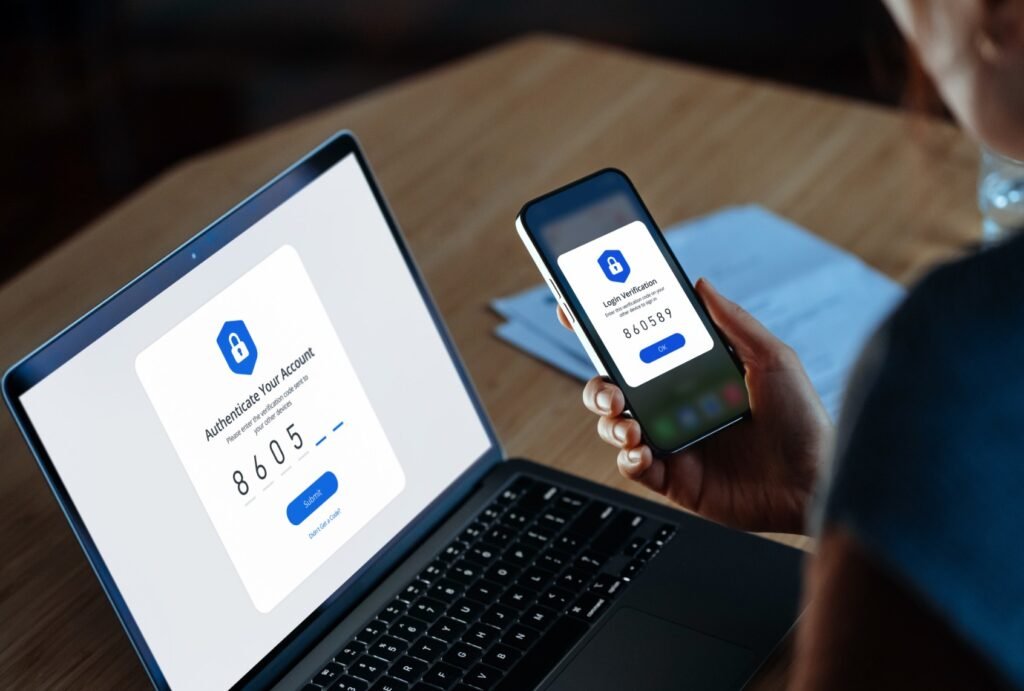
2) Confirm two-factor authentication is enabled
Apple explains how to turn on two-factor authentication in Settings.
3) Check for unknown devices signed in to your Apple Account
On iPhone: Settings → [your name] → scroll to device list.
Remove anything you don’t recognise (or sign it out).
4) Use Safety Check (iOS 16+) if you suspect unwanted access
Apple’s Safety Check helps you quickly stop sharing/access and review which apps/people have access.
Security check: look for “sneaky” configuration profiles and unknown VPNs
1) Check VPN & Device Management
Go to Settings → General → VPN & Device Management (wording can vary slightly). Apple documents where profiles live and how to remove them.
2) Delete any profile you don’t recognise (with care)
Apple warns that removing a profile also removes its associated settings/apps/data.
If it’s a work/school phone, check with IT first.
Stability fix: isolate whether it’s one app, iOS, or hardware
Step A: If it’s mainly one app
Apple’s official steps:
- Close and reopen the app
- Force-close it
- Restart the iPhone
Then: - Update the app
- Delete and reinstall the app (only if you can sign back in)
Step B: Free up storage (crashes love low storage)
If you’re under ~2–3GB free, iOS can become unstable.
Delete large videos, offload unused apps, clear big chat attachments, and reboot.
Step C: If the phone is restarting (Apple logo) rather than just crashing apps
That points more toward system/hardware instability than “normal app crash”. In practice, frequent unexpected restarts are something Apple Support often treats seriously.
Advanced clue (optional): If you see repeated “panic” / “panic-full” entries in Analytics data, that can indicate hardware faults that need service. (This is widely used in repair diagnostics; if you’re seeing this pattern, skip ahead to Apple Support.)
The “clean but realistic” fix: backup, then restore iOS
1) Back up first
Before deeper steps, back up to iCloud or a computer (so you don’t lose photos/messages). Apple’s update guidance also recommends backing up.
2) Update/restore via a computer if needed
If the phone is badly unstable, updating/restoring using a Mac/PC can be more reliable than on-device updates. Apple also documents recovery/restore flows when the restore screen appears.
3) After restore: be cautious about what you reinstall
If you suspect compromise:
- Don’t reinstall unknown profiles/VPNs
- Reinstall apps gradually to see what triggers instability again
When to go straight to Apple (and what to say)
Go to Apple Support if:
- You’re getting multiple unexpected restarts per day
- Crashes persist after an iOS update + storage cleanup
- The device gets very hot, battery drains abnormally fast, or won’t stay on
Apple UK offers Genius Bar reservations and lists practical prep (update + backup) before your visit.
What to tell them:
- “Frequent unexpected restarts/crashes with no error”
- “Steps already tried: force restart, updated iOS, checked profiles, freed storage”
- Approx frequency + any patterns (charging, one app, etc.)
If you genuinely think it’s a cybercrime in the UK
1) If money/accounts are involved
Contact your bank/card provider immediately (fraud team), then report.
2) Report to UK police reporting service
In England, Wales, and Northern Ireland you can report cyber crime/fraud online via Report Fraud (Action Fraud transition) and get guidance.
If it’s happening right now or you’re at immediate risk, use 999/101 as appropriate (Report Fraud guidance covers this).
Extra hardening (optional, for higher-risk users)
Turn on Lockdown Mode (if you think you’re being targeted)
Lockdown Mode is designed for a small number of people who may be personally targeted by sophisticated threats. Apple explains where it is and how to enable it.
Keep software updated (NCSC advice)
The UK’s NCSC consistently recommends installing the latest software and app updates to reduce risk.
Double-check checklist (printable)
Immediate
- Force restart completed
- iOS updated (or attempted)
- Accessories disconnected, storage freed
Account security
- Apple Account password changed
- Two-factor authentication enabled
- Unknown devices removed
Device security
- Unknown profiles removed (if present)
- Safety Check reviewed (if relevant)
Escalation
- Backup completed
- Booked Apple Support / Genius Bar
- Reported to Report Fraud if cybercrime suspected
Images for your blog post (with suggested captions/alt text)
- “Check for iOS updates in Settings → General → Software Update.”
- “Lockdown Mode location in Privacy & Security (for high-risk targeting).”
- “Apple Genius Bar: in-person diagnostics and repair options.”
- “NCSC device security guidance: keeping devices protected.”
Featured Image suggestion (1920×1280): a close-up photo of an iPhone showing “Software Update” (or a neutral cyber-safety visual).
References (source links)
- Apple: Force restart iPhone
- Apple: If an app stops responding/closes unexpectedly
- Apple: Update iPhone/iPad (includes the “keeping software up to date” security note)
- Apple: If you think your Apple Account has been compromised
- Apple: Check device list / where you’re signed in
- Apple: Two-factor authentication
- Apple: Review/delete configuration profiles
- Apple: Lockdown Mode
- NCSC: iOS device security guidance / updates
- UK reporting: Report Fraud / Action Fraud reporting guidance
Accelerate Your Learning
We have created Professional High Quality Downloadable PDF’s at great prices for UK Businesses provided to you from our main website. Which include various helpful Cyber related documents and real world scenarios your business might experience, showing what to do and how to protect your business. Find them here.