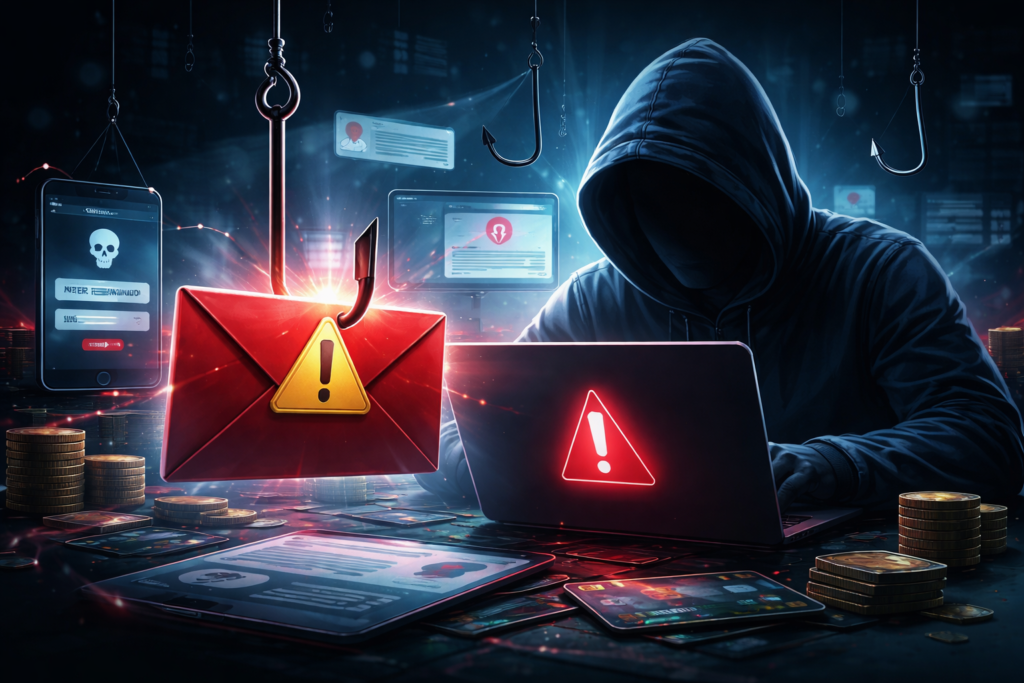
Ransomware is a type of malicious software (malware) that encrypts a victim’s files or locks their computer system, making data inaccessible until a ransom is paid to the attackers. It’s essentially digital extortion – cybercriminals hold your data hostage and demand payment (usually in cryptocurrency) for its release.
How Ransomware Works
Initial Infection
• Phishing emails – Malicious attachments or links in seemingly legitimate emails • Malicious websites – Drive-by downloads from compromised or fake websites • Software vulnerabilities – Exploiting unpatched security flaws in operating systems or applications • USB drives – Infected removable storage devices • Remote Desktop Protocol (RDP) – Brute force attacks on weak passwords • Supply chain attacks – Compromising trusted software updates or vendors
Execution Process
• File scanning – The malware identifies valuable files (documents, photos, databases) • Encryption – Files are locked using strong encryption algorithms (often AES-256) • Key storage – Encryption keys are sent to attacker-controlled servers • System modification – Desktop wallpapers changed, startup programs altered • Ransom note delivery – Instructions left in text files or pop-up windows
Ransom Demand
• Payment instructions – Usually demands cryptocurrency (Bitcoin, Monero) • Time pressure – Often includes countdown timers to create urgency • Threat escalation – May threaten to delete files or increase ransom amount • Contact methods – Provides communication channels (email, dark web chat)
Types of Ransomware
Encrypting Ransomware (Crypto-ransomware)
• Most common and dangerous type • Encrypts user files and data • Files remain on the system but are inaccessible • Examples: WannaCry, CryptoLocker, Ryuk
Locker Ransomware (Screen Lockers)
• Locks users out of their device entirely • Operating system becomes inaccessible • Files typically remain unencrypted • Less sophisticated than crypto-ransomware • Examples: Winlocker, Police-themed ransomware
Double Extortion Ransomware
• Encrypts files AND steals sensitive data • Threatens to publish stolen information if ransom isn’t paid • Creates additional pressure on victims • Examples: Maze, REvil, DarkSide
Triple Extortion Ransomware
• Combines file encryption, data theft, and DDoS attacks • May also target customers, partners, or suppliers • Maximum pressure tactics • Emerging trend in ransomware evolution
Prevention Strategies
Technical Measures
• Regular backups – Maintain offline, tested backups of critical data • Software updates – Keep operating systems and applications patched • Endpoint protection – Use reputable antivirus/anti-malware solutions • Network segmentation – Limit lateral movement if infection occurs • Email filtering – Block suspicious attachments and links • Access controls – Implement principle of least privilege • Application whitelisting – Only allow approved software to run
User Education
• Phishing awareness – Train users to identify suspicious emails • Safe browsing habits – Avoid clicking unknown links or downloads • USB security – Don’t use unknown or untrusted storage devices • Social engineering awareness – Recognise manipulation tactics • Incident reporting – Encourage quick reporting of suspicious activity
Advertisement

- 【Super Signal Coverage】High Speed and High range coverage to boost the wireless coverage in all WLAN networks ,Extend Wi…
- 【Three-in-one access mode】Our WiFi Booster supports three access modes: repeater mode, routing mode, and AP mode. You ca…
- 【Wide Compatibility】Compatible with any wireless network devices that comply with the aggrement of 802.11N/B/G, Router, …
Organisational Policies
• Incident response plan – Prepare for potential attacks • Business continuity planning – Ensure operations can continue during outages • Regular security assessments – Identify and address vulnerabilities • Multi-factor authentication – Protect access to critical systems • Network monitoring – Detect unusual activity early
Response Strategies
Immediate Actions
• Isolate infected systems – Disconnect from network to prevent spread • Identify the scope – Determine which systems and data are affected • Preserve evidence – Document the incident for investigation • Activate incident response team – Engage IT, legal, and management • Notify stakeholders – Inform employees, customers, and authorities as required
Recovery Options
• Restore from backups – If clean, recent backups are available • Decryption tools – Some free tools exist for certain ransomware variants • Professional services – Engage cybersecurity experts for assistance • Rebuild systems – Complete reconstruction if other options fail
Payment Considerations
• Generally not recommended – No guarantee of data recovery • Legal implications – May violate sanctions or funding terrorism laws • Encourages criminals – Payments fund future attacks • Reputation damage – Public knowledge of payment can harm trust • Double payment risk – Criminals may demand additional payments
Economic Impact
Direct Costs
• Ransom payments – Millions of dollars in individual cases • Recovery expenses – IT services, new equipment, data restoration • Downtime losses – Revenue lost during system outages • Regulatory fines – Penalties for data breaches or privacy violations
Indirect Costs
• Reputation damage – Loss of customer trust and business • Insurance premiums – Increased cybersecurity insurance costs • Legal fees – Litigation and regulatory compliance expenses • Competitive disadvantage – Loss of proprietary information
Global Statistics
• Annual damages – Estimated at over £16 billion globally • Average ransom – Ranges from thousands to millions of pounds • Recovery time – Can take weeks to months for full restoration • Success rate – Only about 65% of victims who pay recover their data
Legal and Regulatory Aspects
Regulatory Response
• GDPR implications – Ransomware may trigger data protection violations • Industry standards – Frameworks like NIST provide guidance • Insurance requirements – Policies increasingly require security measures • Critical infrastructure protection – Special regulations for essential services
Future Trends and Evolution
Emerging Threats
• AI-powered attacks – More sophisticated targeting and evasion • IoT ransomware – Targeting smart devices and industrial systems • Cloud-focused attacks – Exploiting cloud storage and services • Mobile ransomware – Increasing threats to smartphones and tablets
Defencive Evolution
• Zero-trust architecture – Assume no system is inherently secure • AI-powered defence – Machine learning for threat detection • Immutable backups – Storage that cannot be encrypted by ransomware • Cyber insurance evolution – More sophisticated coverage and requirements
Geopolitical Dimensions
• State-sponsored groups – Government involvement in ransomware operations • Cyber warfare – Ransomware as a tool of international conflict • Diplomatic tensions – International incidents over major attacks • Regulatory harmonisation – Global cooperation on cybersecurity standards
Summary
• Ransomware is a serious and growing threat affecting individuals, businesses, and governments worldwide • Prevention is far more effective than response – invest in security measures before an attack occurs • Regular, tested backups are your best defense against data loss from ransomware • Employee education is crucial as human error remains a primary attack vector • Paying ransoms is risky and discouraged by law enforcement and security experts • Recovery requires comprehensive planning including technical, legal, and business continuity aspects • The threat landscape continues evolving requiring ongoing vigilance and adaptation
Understanding ransomware is essential in our increasingly digital world. While the threat is serious, organisations and individuals who take proactive security measures significantly reduce their risk and improve their ability to recover if attacked.
Accelerate Your Learning
We have created Professional High Quality Downloadable PDF’s at great prices for UK Businesses provided to you from our main website. Which include various helpful Cyber related documents and real world scenarios your business might experience, showing what to do and how to protect your business. Find them here.